
We know home theater - 26th Anniversary
Questions? CALL TOLL FREE 1-888-764-9273


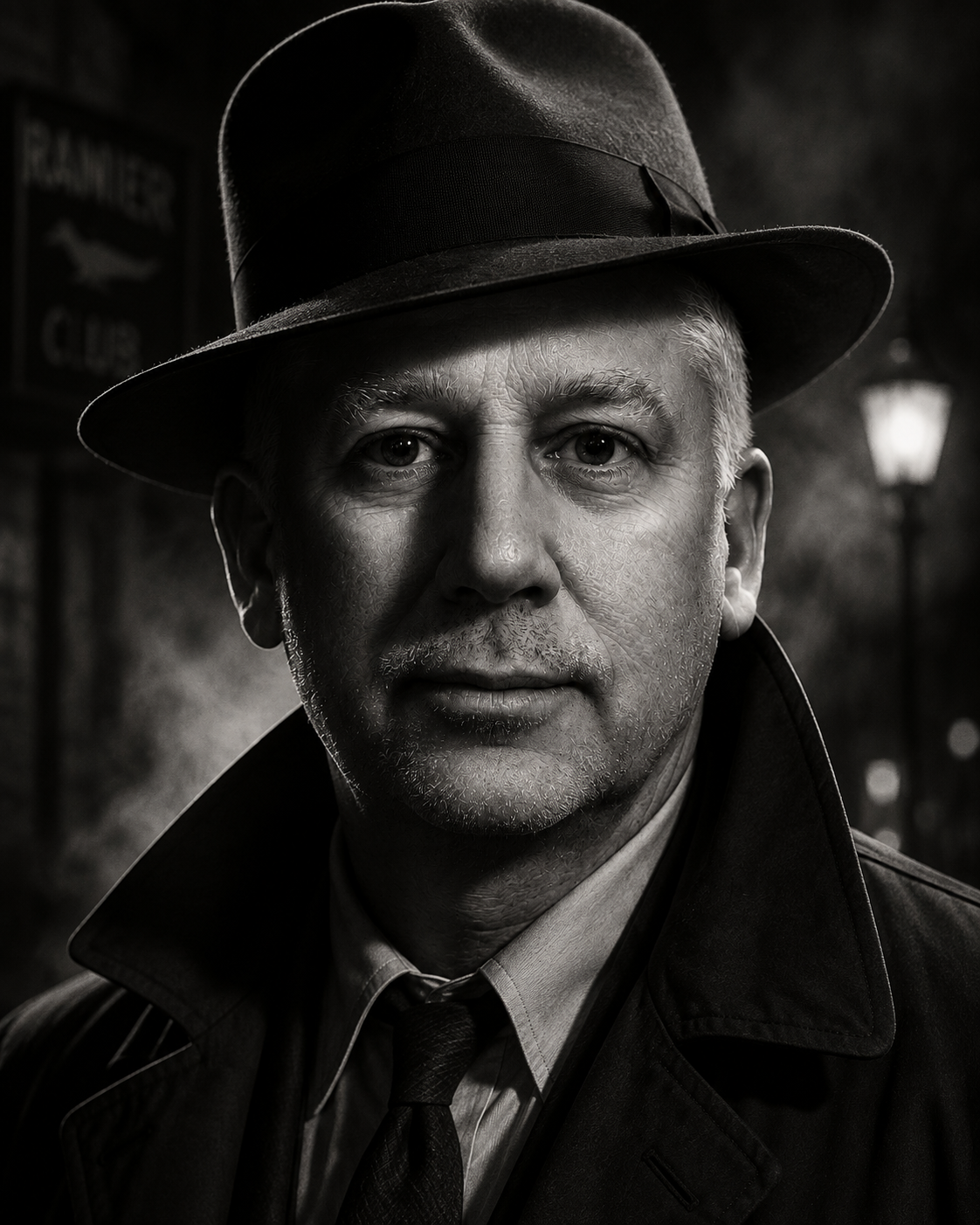
This article reflects Alan Hutchinson's personal interest in film noir, classic movies and cinema history. Alan has watched more than 1,000 classic films, studied film at Babson College and considers Turner Classic Movies his favorite cable channel.
I have watched more than 1,000 classic films, and film noir is one of the styles I return to most often. I like the darkness, but not simply because many of the movies were photographed in black and white. What holds my attention is the feeling that the characters are already in trouble before they fully understand what has happened to them.
A good noir story places an ordinary person in a situation where desire, greed, fear or one bad decision begins closing every exit. I especially love the dialogue. The characters rarely say exactly what they mean. They test one another, conceal information, make threats sound polite and use wit as a weapon. Nearly every conversation is also a negotiation over power.
I also like that nobody is a conventional hero. Even the detectives, victims and people trying to do the right thing are compromised. The characters feel real because they are selfish, frightened, attracted to the wrong person, tempted by money or trying to protect a lie. They manipulate one another because they believe manipulation is the only way to survive.
Noir shows the bottom of human nature, but it does not let the audience stand completely outside it. The disturbing part is recognizing that these people are not monsters from another world. Under enough pressure, fear, jealousy, desire or desperation, ordinary people might be capable of similar behavior. Even when I know how a film ends, I can watch it again because the dialogue, atmosphere and human behavior matter as much as the plot.
Turner Classic Movies has played an important role in keeping that interest alive for me. TCM is my favorite cable channel because it presents classic films in context, introduces viewers to movies they may never have encountered otherwise and treats older films as something worth understanding rather than simply background entertainment.
A big part of that for film noir fans is Eddie Muller. As the host of Noir Alley on TCM, Muller does more than simply introduce the movie. He adds background on the directors, actors, production history and the place each film holds within the noir tradition. That extra context makes the viewing experience much richer.
Film noir is especially well suited to TCM because so many important titles come from the 1930s through the 1950s. The channel makes it possible to move beyond the best-known classics and discover smaller studio pictures, overlooked B movies and lesser-known performances. I may tune in for a famous title such as Double Indemnity or Out of the Past, then stay for a film I have never seen before.
I also appreciate the introductions and historical background. Learning who directed a film, how quickly it was made, which studio produced it and how critics later reassessed it adds another level to the viewing experience. TCM does not just show old movies; it helps preserve the connection between the films, the people who made them and the audience watching them today. Eddie Muller's enthusiasm and knowledge are a big reason that TCM remains such an important outlet for classic noir.
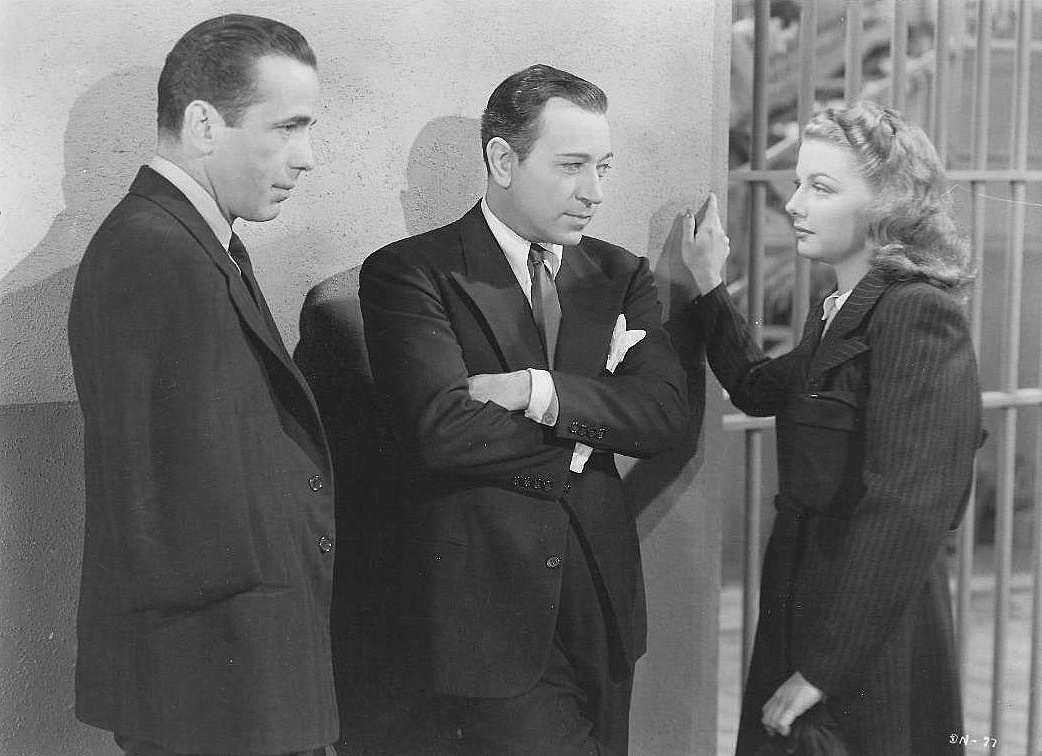
For a long time, I thought Fritz Lang's M, released in Germany in 1931, was the movie that started film noir. I still understand why it feels that way. It has criminal underworld figures, police investigations, a city gripped by fear, psychologically damaged characters, expressive shadows and a bleak view of society. It also uses sound in a remarkably modern way, especially through the murderer's recognizable whistle and the use of events heard outside the frame.
Film historians generally describe M as a major precursor to noir rather than the official first film noir. The classic American noir cycle developed later, primarily during the 1940s and 1950s. The term itself was applied retrospectively by French critics to a group of dark American crime films they encountered after World War II.
That distinction does not reduce the importance of M. Its urban shadows, criminal underworld and atmosphere of social corruption clearly anticipate qualities that became central to film noir. I would describe it as one of the most important roads leading to noir. It may not be the single starting point, but it helped create the visual and psychological language that later filmmakers used so effectively.
Fritz Lang is one of the main reasons I connect M so strongly with film noir. He did not simply make one dark German crime film and then disappear from the story. After leaving Germany, he carried many of the visual and psychological ideas associated with German Expressionism into his American films.
Lang repeatedly returned to characters trapped by guilt, desire, social pressure and their own bad decisions. His films use shadows, enclosed spaces and threatening city environments, but his real subject is often manipulation. People watch one another, lie to one another and attempt to gain control, only to discover that they are being manipulated in return.
You Only Live Once foreshadows the fatalism of 1940s noir. The Woman in the Window and Scarlet Street place Edward G. Robinson's ordinary, respectable characters inside worlds of desire, deception and blackmail. The Big Heat moves into police corruption, organized crime and revenge, while While the City Sleeps extends Lang's interest in manipulation to journalists competing for power while a murderer remains at large.
That is why Fritz Lang belongs at the center of this discussion for me. His career forms a bridge between the expressionist darkness of M and the morally unstable world of American film noir. He understood that the darkest part of a crime story is not necessarily the crime itself. It is watching people justify what they are willing to do to one another.
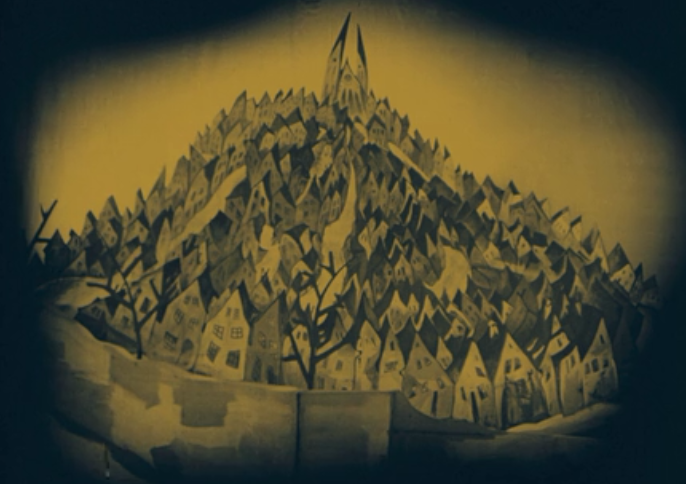
If I had to show someone one film that brings the major elements of classic noir together, I would probably begin with Billy Wilder's Double Indemnity from 1944. Fred MacMurray plays insurance salesman Walter Neff, who believes he is smart enough to plan a murder and collect on an accident policy. Barbara Stanwyck's Phyllis Dietrichson gives him the temptation and the excuse, while Edward G. Robinson's claims investigator Barton Keyes gradually closes in on the truth.
What makes the film so compelling is that Walter tells us very early that the plan failed. The suspense does not depend on whether he escapes. It comes from watching a confident man explain how he talked himself into his own destruction.
The film has nearly everything I associate with noir: first-person narration, flashbacks, venetian-blind shadows, sexual manipulation, greed, murder, hard-boiled dialogue and a protagonist who participates in creating his fate. Wilder and Raymond Chandler adapted James M. Cain's story, and the result is cynical without becoming emotionally empty.
Out of the Past from 1947 may be my favorite example of pure film noir. Robert Mitchum's Jeff Bailey has tried to disappear into a quiet life, but the past arrives to collect him. The story unfolds through an extended flashback involving Jane Greer's Kathie Moffat and Kirk Douglas's Whit Sterling.
Mitchum is perfect for noir because he never appears to be working hard to seem tough. He is calm, tired and intelligent, but he also knows that intelligence may not save him. Jane Greer's Kathie can appear innocent one moment and completely ruthless the next. Their attraction feels real even though the audience understands that it cannot end well.
The movie has beautiful photography and memorable dialogue, but the quality I respond to most is inevitability. Jeff may have left his old life geographically, but morally and emotionally he never escaped it.
Sunset Boulevard is another favorite because it combines film noir with Hollywood history. William Holden's Joe Gillis is a struggling screenwriter who enters the decaying mansion of former silent-film star Norma Desmond, played by Gloria Swanson. He believes he can manage the situation, take the money and maintain some control. As in many noir stories, that confidence is misplaced.
The film begins with a dead man narrating his own story, so the audience immediately knows that the relationship will end in disaster. Yet it is also darkly funny, sad and strangely affectionate toward the silent-film era. Erich von Stroheim, Cecil B. DeMille, Buster Keaton and other figures connect the fictional story to real Hollywood history.
What makes it special to me is the combination of noir, dark comedy and character study. It is not simply a crime story. It is a film about illusion, aging, celebrity and the way Hollywood can discard the people who helped build it.
The Third Man from 1949 is another film I would include among my noir favorites. Directed by Carol Reed from a screenplay by Graham Greene, it takes place in the ruins of postwar Vienna, a city divided among occupying powers and filled with black markets, uncertainty and people trying to survive.
Joseph Cotten plays Holly Martins, an American writer who arrives expecting to work for his old friend Harry Lime. Instead, he is told that Lime has died under suspicious circumstances. Holly begins investigating partly because he believes he knows what kind of man his friend was. The deeper he looks, the more he discovers that friendship may have blinded him to the truth.
Orson Welles makes Harry Lime charming, intelligent and entertaining even after we understand the damage he has caused. That is one of the qualities I like most about noir. Evil is not always presented as obviously evil. A manipulative person may be witty, persuasive and personally appealing. Lime knows how to make moral responsibility sound naive while presenting his own selfishness as realism.
The film also shows how people manipulate themselves. Holly wants to preserve the image of his friend, Anna wants to preserve her loyalty to Lime, and Lime treats other human beings as abstractions. Each character has a reason for avoiding the full truth. Nobody fits comfortably into the role of a traditional hero.
Robert Krasker's black-and-white cinematography turns Vienna into a moral landscape. Tilted camera angles, wet streets, long shadows, ruined buildings and the underground sewer system make the world feel physically and ethically out of balance. Anton Karas' zither score is unusually playful for such a dark story, which makes the film even more unsettling.
The polished classics are important, but I also enjoy the B movies made quickly and inexpensively. Limited budgets often forced directors to simplify the story, work with existing locations, use darkness to hide production limitations and keep the running time short. Those restrictions could produce films with very little wasted motion.
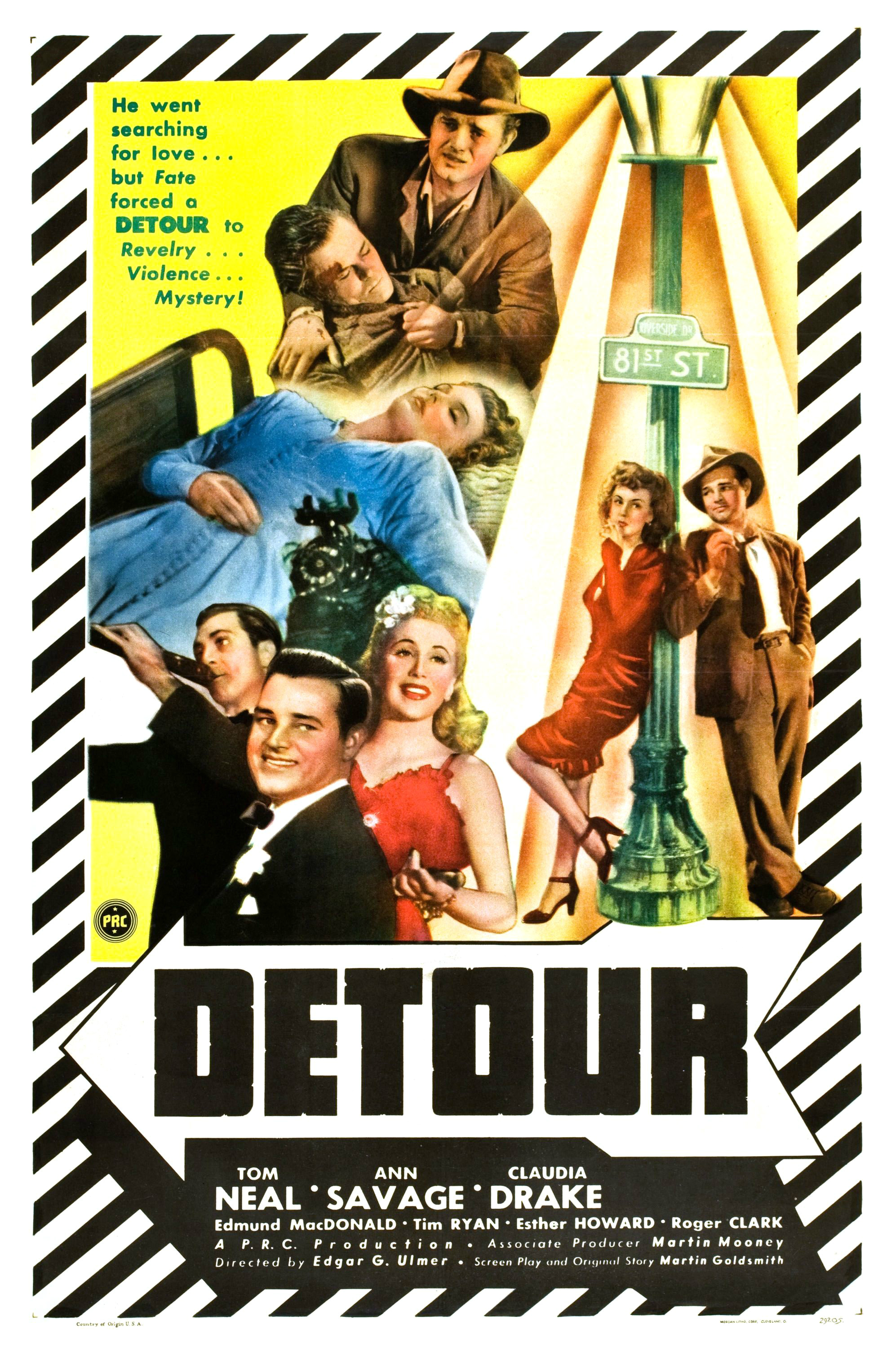
Edgar G. Ulmer's Detour from 1945 is probably the best example. It was made as an extremely inexpensive production, yet the limitations contribute to its nightmare quality. The rear projection looks artificial, the sets are spare and the story moves with the logic of a bad dream.
Tom Neal's Al Roberts insists that fate has singled him out, but his narration may not be reliable. Ann Savage's Vera is one of the harshest and most memorable characters in noir. The film proves that a small budget can create a powerful atmosphere when the premise, performances and sense of doom are strong enough.
Richard Fleischer's The Narrow Margin from 1952 is another favorite low-budget noir. Most of the action takes place aboard a train as a detective protects a witness from killers. The cramped corridors and compartments create tension because the characters have almost nowhere to go.
The picture demonstrates that suspense does not require a huge budget. It needs a strong premise, efficient direction, convincing actors and a setting that increases the pressure.
The title I sometimes think of as Lady in the Window is actually Fritz Lang's The Woman in the Window from 1944. Edward G. Robinson plays a respectable professor whose fascination with a portrait and the woman who inspired it leads him into murder, concealment and blackmail.
I like the film because it turns an ordinary middle-class man into a noir protagonist. He is not a professional criminal or hardened detective. He is a cautious person whose fantasy of stepping outside his routine becomes dangerous almost immediately. It also shows how Fritz Lang carried the dark psychological world of M into his American films.
Film noir did not disappear when the classic black-and-white cycle ended. Its themes and visual ideas continued through what is often called neo-noir. One of my favorites is L.A. Confidential from 1997.
The film is in color and was produced decades after the classic noir period, but it understands the older tradition. It presents glamorous 1950s Los Angeles as a surface covering police corruption, organized crime, tabloid manipulation, prostitution and personal ambition. Its three principal detectives approach justice differently, and none is morally simple.
That is exactly why it works for me. It does not merely imitate venetian-blind shadows and trench coats. It uses the moral complexity, corruption, violence and divided loyalties of classic noir to tell a modern story.

People often identify film noir through black-and-white photography, low-key lighting, cigarette smoke, nighttime streets and sharply angled shadows. I enjoy all of those elements, but the visual style alone is not enough. A movie can copy the shadows and still miss what makes noir powerful.
For me, noir begins with the dialogue and the relationships between the characters. Nobody fully trusts anyone else. A friendly conversation may actually be an interrogation. A romantic promise may be a trap. A confession may be another lie. The characters are constantly reading one another, withholding information and trying to control what happens next.
There are rarely uncomplicated heroes. The detective may be violent, the victim may be dishonest, the lover may be using someone, and the person who appears innocent may be the most calculating character in the film. That does not make them unrealistic. It makes them recognizable. They have the same weaknesses found in ordinary life, only intensified by crime, money, fear and desperation.
Noir reaches toward the bottom of human nature: greed, jealousy, lust, resentment, cowardice and the instinct for self-preservation. Yet it also asks an uncomfortable question. Are these characters fundamentally different from us, or have they simply been placed in circumstances that expose qualities most people keep under control?
I think part of noir's appeal is knowing that almost anyone could make one of these mistakes. Most people will never plan a murder or become involved in a criminal conspiracy, but many people understand temptation, rationalization and the urge to hide the truth. Noir takes those familiar impulses and follows them to their darkest possible conclusion.

Alan Hutchinson is the founder and owner of HTmarket.com. He graduated from Babson College in 1984 with a minor in film, produced and edited a Super 8 movie, built a dedicated screening room in 1996 and has watched more than 1,000 classic films. His film interests include film noir, Westerns, dramas, classic Hollywood and cinema history.
British Film Institute: M (1931)
British Film Institute: Fritz Lang—10 Essential Films
Turner Classic Movies: Double Indemnity (1944)
Turner Classic Movies: Out of the Past (1947)
Library of Congress: Sunset Boulevard (1950)
British Film Institute: The Third Man (1949)
Library of Congress: Detour (1945)
Turner Classic Movies: The Narrow Margin (1952)
Turner Classic Movies: The Woman in the Window (1944)
Library of Congress: L.A. Confidential (1997)
Wikimedia Commons: They Drive by Night Public-Domain Publicity Still
Wikimedia Commons: The Cabinet of Dr. Caligari Holstenwall Scene
Wikimedia Commons: Detour Theatrical Poster
Wikimedia Commons: Chinatown Los Angeles Neon, Alossix, CC BY 3.0




.jpg)
