
We know home theater - 26th Anniversary
Questions? CALL TOLL FREE 1-888-764-9273


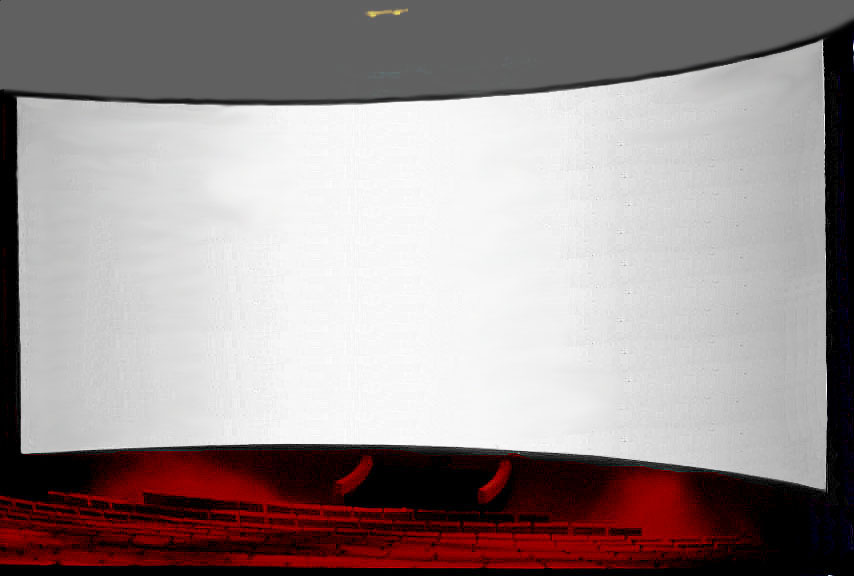
For the first half of motion-picture history, most films were shown in a frame that was much closer to square than the wide screens associated with modern theaters. Widescreen experiments appeared before the 1950s, but the major transformation came when studios and theater owners searched for experiences that television could not reproduce at home.
Beginning in 1952, a rapid succession of new formats promised larger images, wider compositions, stereophonic sound and a more immersive presentation. Some required multiple cameras and projectors. Others used special lenses to squeeze a wide image onto standard 35mm film. Large-format systems used 65mm negatives and 70mm release prints to produce greater detail on enormous screens.
Although many competing processes disappeared, they permanently changed filmmaking. By the end of the 1950s, widescreen had moved from novelty to standard practice.
Silent 35mm film commonly produced an image close to 1.33:1, meaning the picture was approximately 1.33 times as wide as it was tall. When an optical soundtrack was added along one side of the film during the transition to sound, the available picture area became narrower.
The Academy of Motion Picture Arts and Sciences standardized a slightly wider 1.37:1 frame in the early sound era. This Academy ratio defined the appearance of most Hollywood films through the 1930s and 1940s. It also closely resembled the 4:3 shape later used by standard-definition television.
Filmmakers became highly skilled at composing within this taller frame. Faces, doorways, staircases and groups of actors could be arranged vertically as well as horizontally. Widescreen did not simply add more picture at the sides; it encouraged a different visual language.
Movie attendance declined after World War II as suburbanization, changing leisure habits and television altered the entertainment market. Studios and theater owners responded with attractions that emphasized the scale and spectacle of theatrical presentation.
Color, stereophonic sound, 3-D and widescreen were promoted as experiences unavailable on the small television screens of the period. The Academy of Motion Picture Arts and Sciences describes the 1950s and 1960s widescreen movement as a direct response to audiences choosing the convenience and affordability of television.
Cinerama made its public debut with This Is Cinerama in 1952. The system used three synchronized 35mm cameras to photograph adjoining sections of a very wide scene. In specially equipped theaters, three synchronized projectors placed those images side by side on a deeply curved screen.
The curved screen filled a large portion of the viewer's peripheral vision, while multichannel sound increased the sense of immersion. The opening roller-coaster sequence of This Is Cinerama became famous for demonstrating the physical impact of the process.
Cinerama was spectacular but difficult to operate. The three pictures had to remain aligned and synchronized, and the seams between image panels could be visible. Production required a large three-lens camera, while exhibition required major theater modifications and specialized projection crews.
Twentieth Century-Fox introduced CinemaScope commercially in 1953. Instead of using three strips of film, CinemaScope used an anamorphic lens to compress a wide field of view horizontally onto a standard vertical 35mm frame. A corresponding projection lens expanded the image back to its intended proportions on the theater screen.
How to Marry a Millionaire was the first feature photographed in CinemaScope, but The Robe became the first CinemaScope feature released. Its box-office success demonstrated that anamorphic widescreen could become an important part of mainstream theatrical exhibition.
CinemaScope initially produced an extremely wide image. The exact projected ratio changed as magnetic and optical soundtracks were incorporated, and later industry standards settled around 2.39:1. The term “2.35” remained common in conversation, while “2.40” became a convenient rounded description.
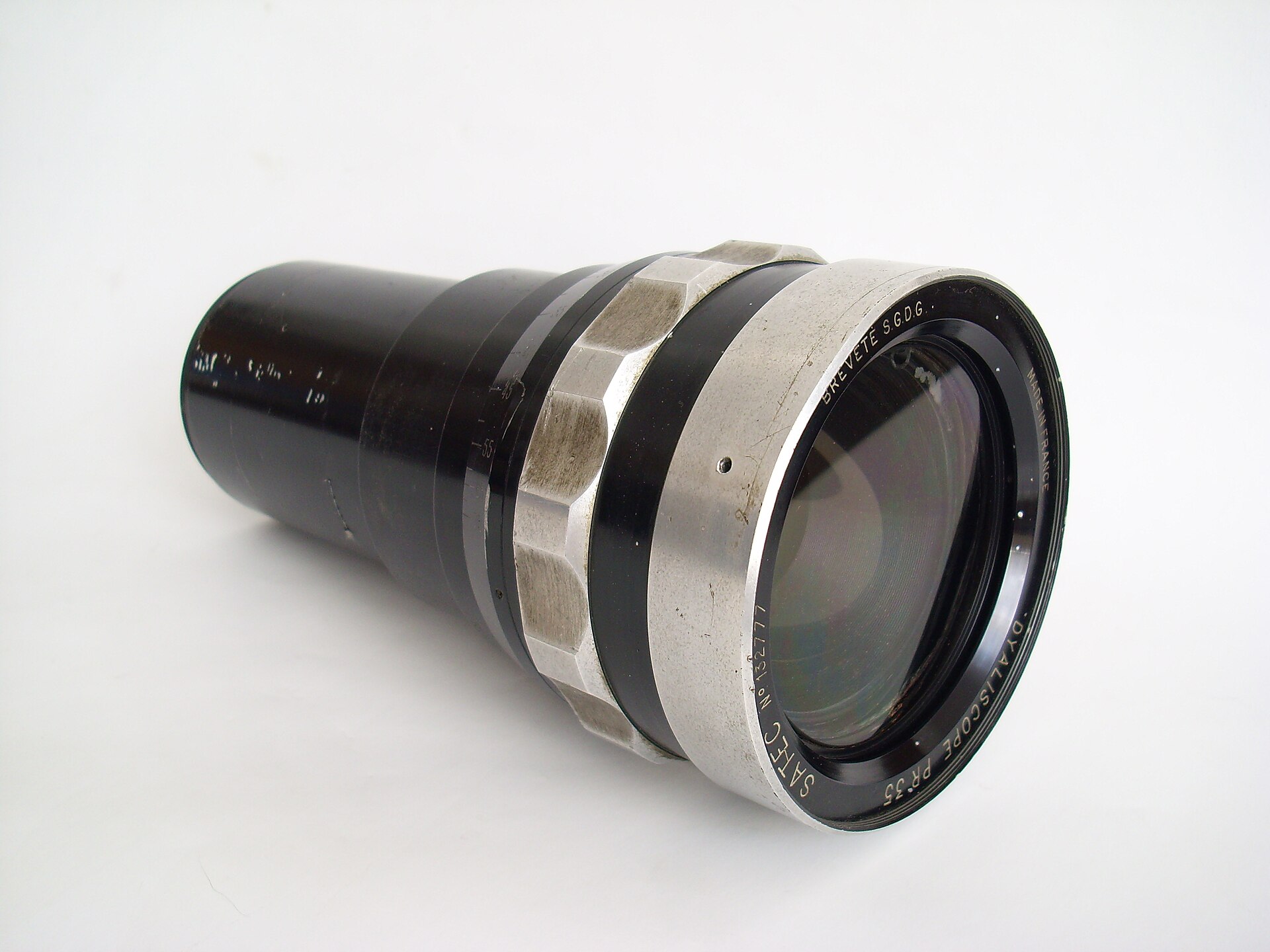
Anamorphic photography gave filmmakers a much wider horizontal canvas. Directors could stage several actors across the frame, contrast figures with landscapes, and create compositions that did not depend on frequent cutting between close-ups.
Early CinemaScope lenses also introduced technical challenges. Close-ups could distort faces, focus could be difficult, and highlights sometimes produced horizontal flares. Many of these characteristics later became desirable parts of the anamorphic look.
Panavision was founded in 1954 partly to solve the shortage and complexity of widescreen projection lenses. Its first Super Panatar attachment could be adjusted for ratios from 1.33:1 to 2.66:1. Panavision later developed camera lenses that reduced distortions associated with early CinemaScope optics and became an industry standard for anamorphic production.
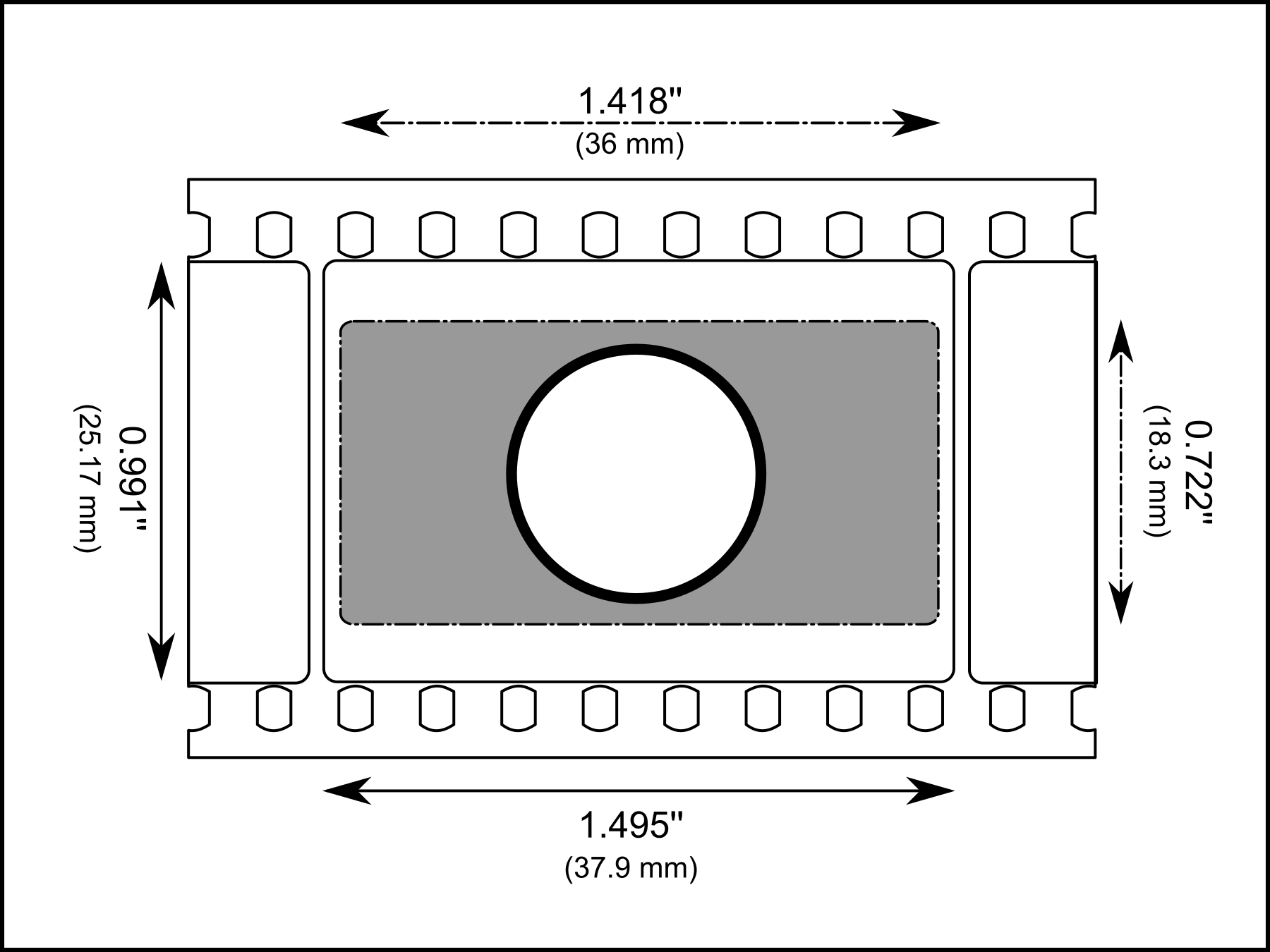
Paramount introduced VistaVision as its alternative to CinemaScope. Instead of squeezing the image with an anamorphic lens, VistaVision ran standard 35mm film horizontally through the camera. Each image used an area approximately twice as wide as a conventional vertical 35mm frame.
The larger camera negative produced a finer-grained image with improved detail. Most VistaVision films were reduced to standard vertical 35mm release prints for projection, allowing ordinary theaters to show them without installing horizontal projectors.
Paramount's White Christmas, released in 1954, was the first feature made in VistaVision. Although the format did not outlast anamorphic systems as a routine production process, its large negative area remained valuable for visual-effects photography. Decades later, filmmakers again began using VistaVision cameras for selected productions.
Todd-AO pursued widescreen through a larger film format rather than anamorphic 35mm photography. The system photographed on 65mm negative and used 70mm release prints, with the additional film width available for soundtracks.
Oklahoma! was released in Todd-AO in 1955. Its Todd-AO scenes were photographed at 30 frames per second to produce smoother movement, while a separate CinemaScope version was filmed in 35mm for theaters unable to present the new process. Later 65mm productions generally used the conventional 24-frame-per-second rate.
The larger negative offered exceptional detail, reduced grain and a sense of scale well suited to landscapes, musicals and historical epics. Large-format roadshow presentations often included reserved seating, intermissions, souvenir programs and specially equipped theaters.
Panavision expanded large-format production through two important systems. Super Panavision 70 used spherical lenses with 65mm film and produced a wide image without anamorphic compression. Films photographed in the process include Lawrence of Arabia and 2001: A Space Odyssey.
MGM Camera 65, later called Ultra Panavision 70, combined 65mm film with a mild anamorphic squeeze. It produced an exceptionally wide image associated with productions including Ben-Hur. Panavision's history records that the system used a 1.25x squeeze, while current Ultra Panavision lenses use a closely related 1.3x approach.
These large-format systems were expensive and never replaced 35mm for routine production, but they established a visual standard that continues to influence premium-format cinema.
As the competition among widescreen systems settled, most conventional 35mm theatrical presentation centered on two broad categories:
Flat widescreen—commonly 1.85:1 in the United States: The image is photographed with spherical lenses and composed for a wider theatrical crop.
Scope—approximately 2.39:1: The image is generally photographed or digitally presented in an anamorphic-style widescreen format.
European productions also frequently used 1.66:1. Individual films could use many other ratios, but 1.85 and 2.39 became the most familiar shapes in American commercial theaters.
Widescreen movies created problems when transferred to 4:3 televisions. A very wide film could be reduced and displayed with black bars above and below the picture, a method known as letterboxing. Alternatively, the image could be enlarged and selectively reframed through pan-and-scan, which filled the television screen but removed portions of the original composition.
LaserDisc collectors helped popularize letterboxed editions that preserved the theatrical framing. Anamorphically enhanced DVD later used more of the available video resolution for widescreen displays.
The 16:9 television shape, approximately 1.78:1, became a practical compromise between the older 4:3 television frame and wider theatrical formats. A 1.85:1 movie nearly fills a 16:9 screen, while a 2.39:1 film still displays with black bars at the top and bottom.
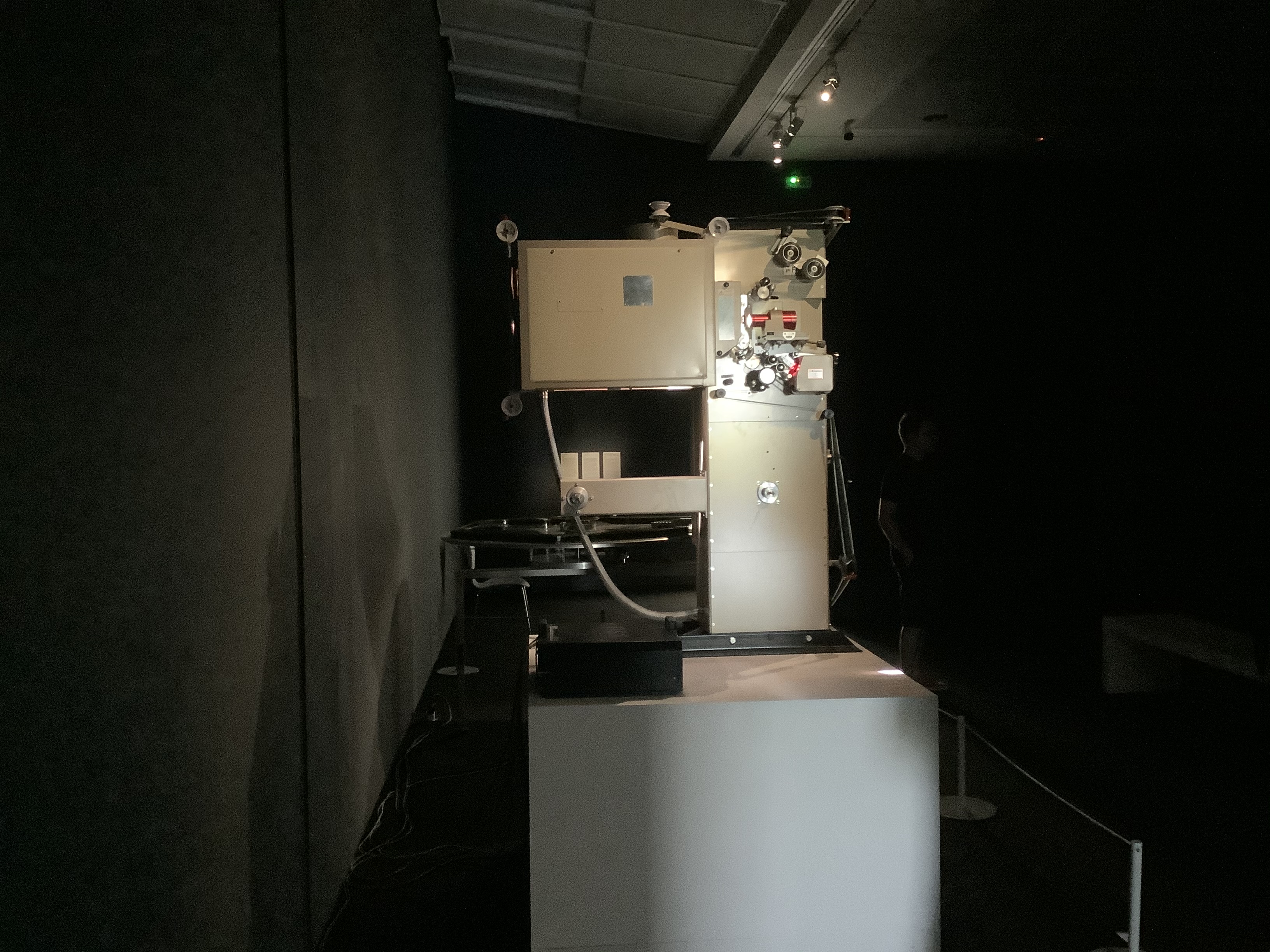
IMAX was founded in 1967 and developed a large-format system using 70mm film traveling horizontally through the projector. The 15-perforation frame provided a very large image area capable of supporting enormous screens.
Unlike classic CinemaScope, IMAX is often associated with a taller image as well as greater scale. Some modern films shift between a conventional widescreen ratio and a taller IMAX presentation for selected scenes. Digital IMAX systems and other premium large-format theaters now use laser projection, large screens and immersive sound without necessarily relying on 70mm film.
Digital cameras and projectors separated aspect ratio from the physical dimensions of a particular film frame. Filmmakers can now choose from many sensor sizes, lenses and delivery formats, then crop or extract the final image for a selected ratio.
Even so, historic widescreen formats continue to influence the look of modern movies. Anamorphic lenses remain popular for their horizontal flares, oval out-of-focus highlights and distinctive edge behavior. Large-format digital cameras recreate some of the shallow depth of field and expansive detail associated with 65mm film.
VistaVision and Ultra Panavision have also returned in modern productions, demonstrating that a format can reappear when filmmakers find new creative uses for its visual characteristics.
Home-theater owners generally choose between a 16:9 screen and a wider CinemaScope-style screen. A 16:9 screen is practical for television, sports, streaming and movies in ratios near 1.78 or 1.85. A wider screen can preserve the visual impact of 2.39:1 films without reducing their height.
Constant-image-height systems use a wide screen and keep the picture height consistent as the image expands horizontally for scope movies. Constant-image-width systems keep the screen width fixed, causing wider films to become shorter. Motorized masking can frame multiple ratios and hide unused areas of the screen.
The best choice depends on the room, projector, seating distance and the types of programming watched most often. Understanding aspect ratios prevents accidental cropping and helps preserve the composition created by the filmmakers.
A projection screen can physically remain one size while the movie image changes shape. A 1.33:1 classic film, 1.78:1 television program, 1.85:1 theatrical feature and 2.39:1 scope movie will each leave different unused areas on a fixed screen. Those unused areas may appear as gray or black bars, particularly when light from the projector spills beyond the active picture.
Stewart Filmscreen developed masking systems that place deep-black fabric around the active image area. The masks move inward or outward to frame the exact aspect ratio being shown. Besides giving the picture a finished theatrical border, the dark material absorbs stray light and increases perceived contrast, helping the active image appear sharper and more defined.
Stewart offers several masking approaches. Manual panels provide a straightforward way to convert a scope screen to 16:9. Dual-aspect systems move between two predetermined screen shapes. Continuously variable systems can stop at numerous stored positions, while four-way systems move masks from the top, bottom and both sides to frame nearly any historic or modern aspect ratio.
The VistaScope is designed around a native 2.40:1 constant-image-height screen and uses moving side masks for narrower material. The WallMask can be configured for vertical, horizontal or four-way masking. At the high end, the Director's Choice uses four independently motorized masking panels with programmable positions and home-automation integration. Stewart's newer StreamPro system provides automated horizontal masking for multiple streaming and cinema ratios.
A common way to fill a 2.39:1 or 2.40:1 home-theater screen is to zoom the projector until the scope image reaches the full width of the screen. The black bars encoded above and below the movie are enlarged beyond the visible screen area. This method is convenient, but part of the projector's imaging panel and light output is still devoted to those unused bars.
A Panamorph anamorphic conversion lens uses a different approach. Compatible video processing first stretches the scope image vertically so that it uses the projector's full 16:9 imaging panel. The external Panamorph lens then optically expands that image horizontally to restore the correct proportions across a 2.40:1 screen.
Because more of the projector's available pixels and light are directed into the active movie image, Panamorph states that its current cinema-format lenses can provide up to approximately 30 percent greater brightness and image detail for 2.40:1 content compared with displaying the same movie inside the projector's normal 16:9 frame. The precise benefit depends on the projector, lens, throw distance, screen size and installation.
The lens normally remains in the light path. When 16:9 material is shown, the projector or video processor applies the appropriate scaling so the image appears correctly on the wider screen. This avoids repeatedly changing projector zoom, focus and lens-shift memories when moving between television and scope movies.
Panamorph lenses are projector-specific or projector-compatible optical systems rather than universal accessories. Proper throw distance, mounting, image scaling and screen geometry are important. Current Alpha-series models are designed to reduce the geometric distortion associated with some earlier anamorphic installations.
These technologies can also be combined. A 2.40:1 Stewart screen can use a Panamorph lens for scope presentation and motorized side masking for 16:9, 1.85:1, Academy-ratio and other narrower content. The result is a constant-image-height theater in which widescreen films expand dramatically across the room while older and narrower formats remain properly framed.
Widescreen developed from both competition and creative ambition. Studios wanted to offer something television could not match, while filmmakers discovered new ways to use horizontal space, landscape, movement and groups of characters.
Cinerama demonstrated the impact of an image surrounding the audience. CinemaScope made anamorphic widescreen practical on standard 35mm film. VistaVision increased image quality by turning 35mm sideways. Todd-AO, Super Panavision 70 and Ultra Panavision 70 used larger film to deliver roadshow spectacle. IMAX extended the large-format tradition into an even more immersive scale.
Today's digital cinema no longer depends on a single physical film format, but the visual vocabulary created during the widescreen revolution remains central to how movies are photographed, projected and experienced at home.

Alan Hutchinson is the founder and owner of HTmarket.com. He has worked in the home theater industry since 2000, built a dedicated CRT-projection screening room in 1996 and later founded the HT Design home theater seating brand. He graduated from Babson College in 1984 with a minor in film.
Academy of Motion Picture Arts and Sciences: This Is Widescreen
Library of Congress: This Is Cinerama
Academy Library: 1953 Motion Picture Association Annual Report
Library of Congress: VistaVision in the Library's Collection
Academy of Motion Picture Arts and Sciences: Oklahoma! and Todd-AO
Panavision: History and Awards
Library of Congress: All About Film Formats
Stewart Filmscreen: WallMask Masking Systems
Stewart Filmscreen: Director's Choice Four-Way Masking
Stewart Filmscreen: VistaScope Constant-Height Masking
Panamorph: Cinema-Format Anamorphic Conversion Lenses




