
We know home theater - 26th Anniversary
Questions? CALL TOLL FREE 1-888-764-9273


Puppetry is often associated with children’s theater, television variety shows or traditional marionette stages. Yet some of the most memorable moments in major Hollywood films were created by puppeteers working just outside the camera frame. A puppet could appear as a performance within a story, as in The Sound of Music, or become a central dramatic character, as Yoda did in The Empire Strikes Back.
Film puppetry includes more than marionettes suspended by strings. It can involve hand puppets, rod puppets, cable-controlled faces, radio-controlled mechanisms, full-body costumes, animatronics and large creatures operated by several performers. What these methods share is physical performance. The character occupies real space, receives real light and gives the actors something tangible to watch, touch and respond to.
One of Hollywood’s most famous marionette sequences appears in the 1965 film The Sound of Music. During “The Lonely Goatherd,” Maria and the von Trapp children present an elaborate puppet show for Captain von Trapp, Baroness Schraeder and Max Detweiler. The sequence is so naturally integrated into the movie that many viewers may not realize it was created by two renowned professional puppeteers.
Bil Baird and his wife and creative partner, Cora Eisenberg Baird, produced and performed the sequence. The actors held and operated puppets in some of the wider shots, but the detailed close-ups were performed by the Bairds, whose control of gesture, timing and personality made the marionettes appear to sing, dance, flirt and yodel.
The puppet show was created specifically for the movie adaptation. In the original stage musical, Maria sings “The Lonely Goatherd” to comfort the children during a thunderstorm. The film relocates the song and turns it into a visual set piece, allowing director Robert Wise to present the number as a miniature theatrical production inside the larger motion picture.
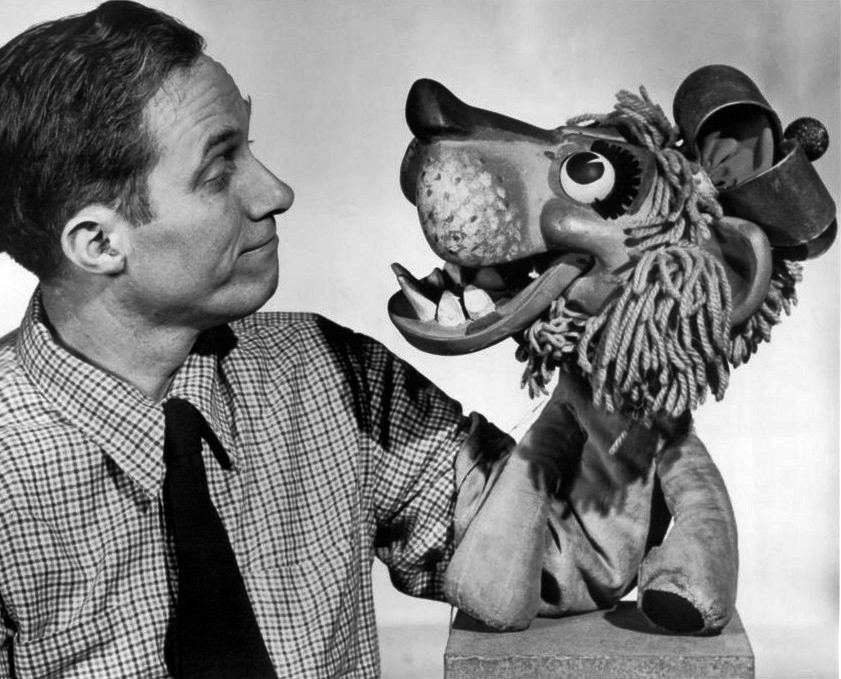
Bil Baird was not hired merely because the production needed someone who knew how to pull marionette strings. His career extended across six decades of theater, film, television, nightclubs, advertising and international touring. The Center for Puppetry Arts estimates that his career led to the creation of nearly 3,000 puppets and describes his contributions to the field as difficult to overstate.
Baird also wrote The Art of the Puppet, a book that became an important reference in the field. His television work was pioneering, and his approach influenced later puppeteers, including Jim Henson. Cora Baird was an essential partner in the company’s design, performance and touring work, and the couple became known internationally for bringing sophisticated puppetry to broad audiences.
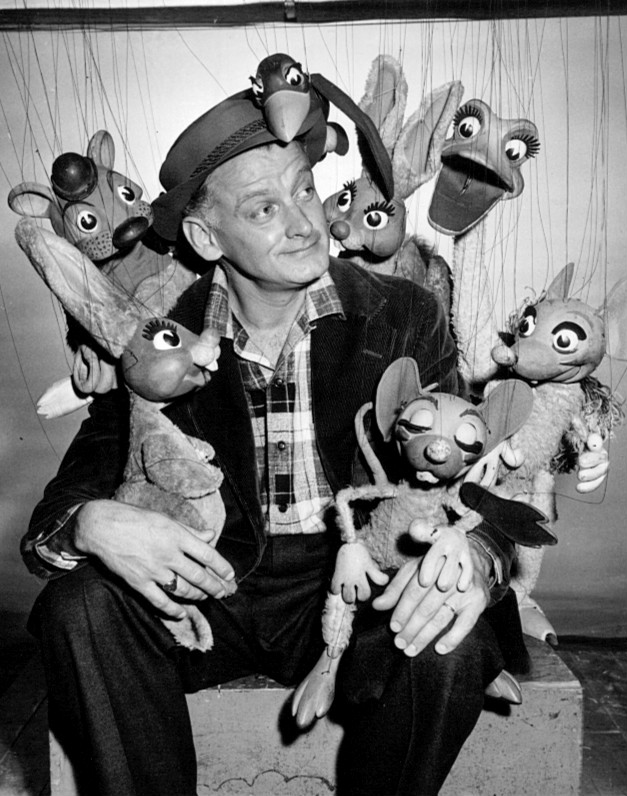
Many of the original Sound of Music puppets survive in the collection of the Charles H. MacNider Art Museum in Mason City, Iowa, Bil Baird’s hometown. The museum holds the largest collection of Baird puppets and has undertaken conservation work to preserve figures from the “Lonely Goatherd” performance.
Jim Henson helped move puppetry from a supporting novelty to the center of popular screen entertainment. The Muppets were not presented as objects that occasionally interacted with actors. They were treated as performers with distinct voices, comic timing, emotional relationships and recognizable personalities.
In films such as The Muppet Movie, puppets carry the story rather than interrupt it. Camera framing, specially designed sets, concealed operating positions and carefully coordinated performers allow the characters to drive cars, travel through landscapes and share scenes with human actors. The technical method remains visible in theory, but the audience quickly accepts Kermit, Miss Piggy, Fozzie and Gonzo as the film’s cast.
Henson’s work also demonstrated that film puppetry did not have to be limited to comedy. Puppets could express uncertainty, ambition, affection, fear and disappointment. The performance depended on the coordination of body movement, eye focus, mouth movement, voice and the reaction of other characters.
Yoda’s appearance in The Empire Strikes Back presented a major risk. The character had to begin as an eccentric mystery and gradually become a wise teacher whose ideas were central to the story. If audiences saw only rubber, mechanisms and a performer hidden beneath the set, some of the film’s most important dramatic scenes would fail.
Frank Oz performed and voiced Yoda, working with a skilled team that helped control the character’s movements and mechanisms. Mark Hamill later recalled that he had no trouble believing Yoda was real during filming because Oz and the puppetry crew gave him a convincing acting partner. Director Irvin Kershner treated Yoda as an actor on the set, sometimes addressing the puppet rather than the hidden puppeteer.
The result is important because Yoda is not remembered merely as a successful visual effect. He is remembered for his personality and performance. The puppet’s physical limitations encouraged restraint: small head movements, eye focus, pauses, changes in posture and subtle shifts in voice carried the scene.
With The Dark Crystal, Jim Henson and Frank Oz attempted something even more ambitious: a feature-length fantasy world populated almost entirely by puppet characters and creatures. The production required designers, builders, technicians and performers to develop figures capable of sustaining dramatic scenes rather than delivering only short effects shots.
The film combined puppetry, full-body creature performance, mechanical facial movement, elaborate costumes, detailed sets and atmospheric photography. The Skeksis, Mystics, Gelflings and other inhabitants of the world needed different movement vocabularies. Their physical behavior helped communicate age, culture, danger and personality before the audience fully understood the story.
The production became a showcase for puppetry and animatronics. It also demonstrated one of practical puppetry’s great strengths: a fabricated character can share the same light, air, floor, costume textures and camera lens as the rest of the set. The fantasy world feels physically unified because so much of it existed in front of the camera.
Labyrinth placed human performers Jennifer Connelly and David Bowie inside a world crowded with puppet creatures. Some characters were small hand or rod puppets, while others required full-body costumes, mechanical faces or multiple operators.
The film’s puppet population makes the labyrinth feel inhabited rather than decorated. Creatures appear in the foreground, background and edges of the frame. They interrupt conversations, argue, sing, give bad advice and react to one another. The world gains credibility from the suggestion that these characters continue living even when the main story moves past them.
Work developed for The Dark Crystal and Labyrinth helped form the foundation of Jim Henson’s Creature Shop, which continued combining puppetry, animatronics and later digital techniques for film, television, advertising and themed entertainment.
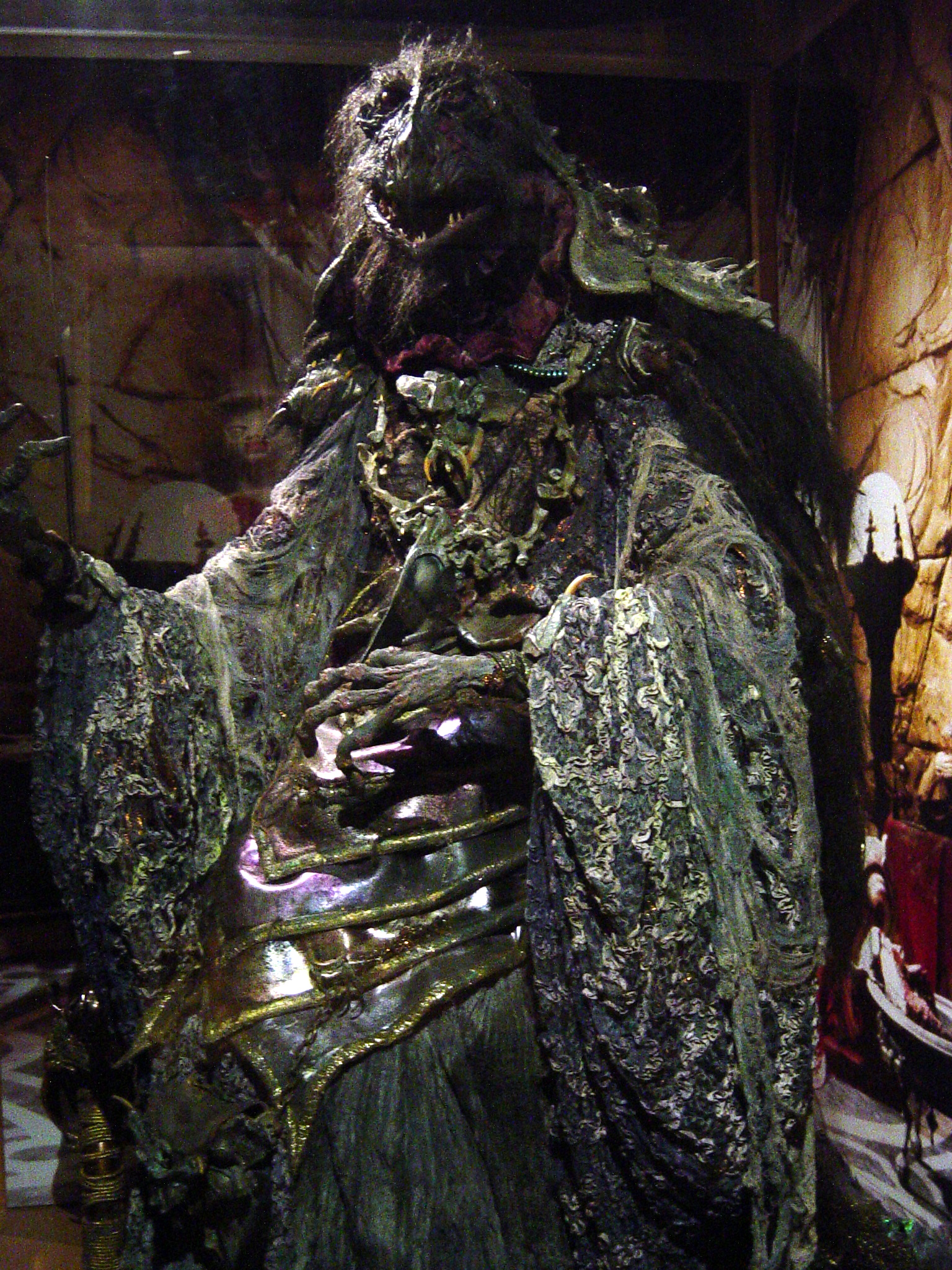
The boundary between a puppet and an animatronic character is not always precise. A simple hand puppet may be controlled directly by one performer. A complex film creature may use hand controls, cables, rods, radio-controlled motors, mechanical eyes and several performers working together.
In both cases, movement must be performed. A mechanical eyebrow can rise, but someone must decide when it rises, how quickly it moves and what the motion means. Creature-effects teams therefore combine engineering with acting, mime, choreography, sculpture, costume design and cinematography.
Large creatures may require one performer inside the body, another controlling the face and additional operators controlling limbs, ears, eyes or tails. The operators must behave like one actor. Poor coordination can make the creature feel mechanical; unified timing can make it appear alive.
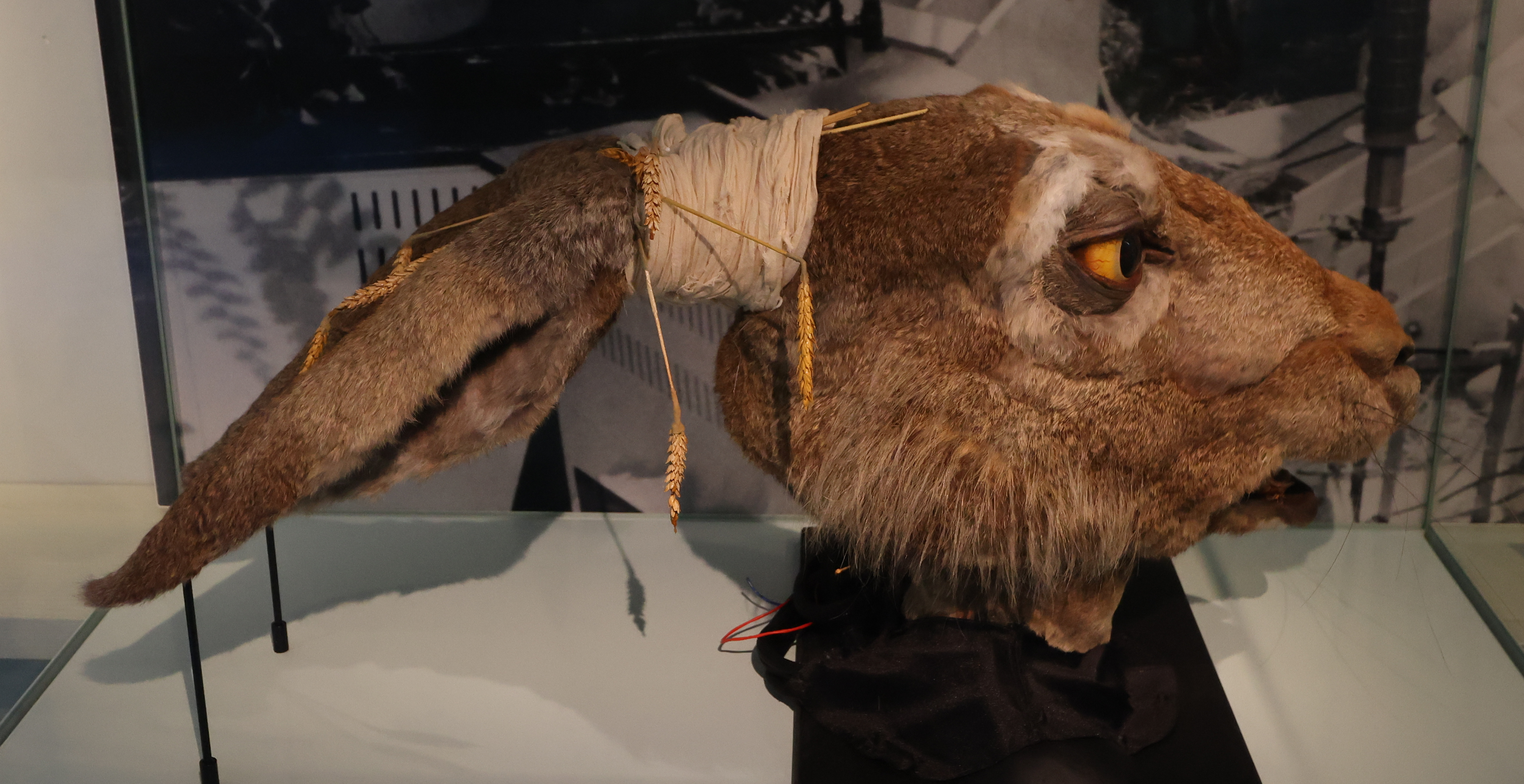
A physical puppet gives an actor an actual eye line. The actor can see where the character is looking, judge its distance, react to its timing and sometimes touch it. Shadows fall naturally, and the performer can respond to unexpected details created during the take.
That does not mean puppetry is automatically more realistic than digital visual effects. Each technique has strengths and limitations. Digital characters can perform movements that would be impossible for a physical puppet, while practical puppets provide immediate presence and texture. Many modern productions combine both methods, using a physical character on set and digital work to remove rods, improve facial movement or extend actions.
The strongest method is usually the one that serves the scene. A quiet conversation may benefit from the restraint and physical presence of a puppet. A fast action sequence may require digital movement. The goal is not to prove that one technique is superior, but to make the character believable.
Audiences commonly associate a puppet with one famous performer, but film puppetry is usually collaborative. A character may begin with drawings, sculpture and material tests. Builders develop the body and mechanisms. Puppeteers rehearse movement and voice. Camera crews determine angles that preserve the illusion, lighting crews reveal texture without exposing unwanted details, and editors select takes in which all of the elements work together.
The operator may be beneath a raised set, behind a wall, inside a costume or lying on the floor just outside the frame. Multiple video monitors may be needed so performers can see the image from the camera’s point of view. A motion that feels natural to the operator can look reversed or incorrectly framed on screen, so puppeteers often learn to perform for the monitor rather than from their own physical perspective.
The “Lonely Goatherd” sequence offers a useful starting point because it connects an older marionette tradition with one of Hollywood’s most popular musicals. Bil and Cora Baird brought decades of professional stage and screen experience to a scene that many viewers remember for its warmth, humor and technical precision.
Jim Henson expanded that tradition by treating puppets as a complete film cast and by building fantasy worlds around their physical presence. Frank Oz demonstrated that a puppet could deliver a serious dramatic performance opposite a human actor. Later creature shops continued to blend performance, sculpture, mechanics and digital enhancement.
The technology changes, but the fundamental challenge remains the same: persuade the audience that an inanimate construction has intentions, emotions and a life beyond the mechanics used to operate it. When that illusion succeeds, viewers do not remember the rods, strings or cables. They remember the character.

Alan Hutchinson is the founder and owner of HTmarket.com. He graduated from Babson College in 1984 with a minor in film, built a dedicated screening room in 1996 and has worked in the home theater industry since 2000. His interests include classic films, filmmaking history, theatrical presentation and the practical arts used to create movies.
Rodgers & Hammerstein: Rare Behind-the-Scenes Photos from The Sound of Music
Rodgers & Hammerstein: The Sound of Music—A Guide to Stage and Screen
Center for Puppetry Arts: The Art of Bil Baird
Charles H. MacNider Art Museum: Bil Baird’s World of Puppets
StarWars.com: Mark Hamill on Performing with Yoda
StarWars.com: George Lucas on Yoda and The Empire Strikes Back
The Jim Henson Company: Jim Henson and the Development of The Dark Crystal and Labyrinth
Center for Puppetry Arts: The Jim Henson Collection
Wikimedia Commons: Bil Baird and Charlemane, 1963
Wikimedia Commons: Art Carney with Bil Baird Puppets, 1958
Wikimedia Commons: Original Skeksis on Display
Wikimedia Commons: Animatronic March Hare from Alice in Wonderland




