
We know home theater - 26th Anniversary
Questions? CALL TOLL FREE 1-888-764-9273



This is not a ranking of the five greatest movies ever made. It is a personal list of films that are almost impossible for me to leave once I encounter them while channel flipping.
Many times it happens on a rainy Saturday afternoon. I am not planning to watch a movie from beginning to end. I may be moving through the channels, checking what is on and expecting to keep going. Then I land on one of these five films.
It does not matter whether the movie has just started or is already halfway through. I recognize the characters, understand the situation and tell myself I will watch only a few minutes. Before long, I am committed to staying with it until the end.
These are not all the same kind of movie. Two are prisoner-of-war stories, two are Westerns and one is a prison drama made decades later. Yet they share something important: people facing long odds and refusing to surrender completely. They endure confinement, violence, distance, injustice, fear and sacrifice. Even when the outcome is uncertain or tragic, the characters keep moving forward.
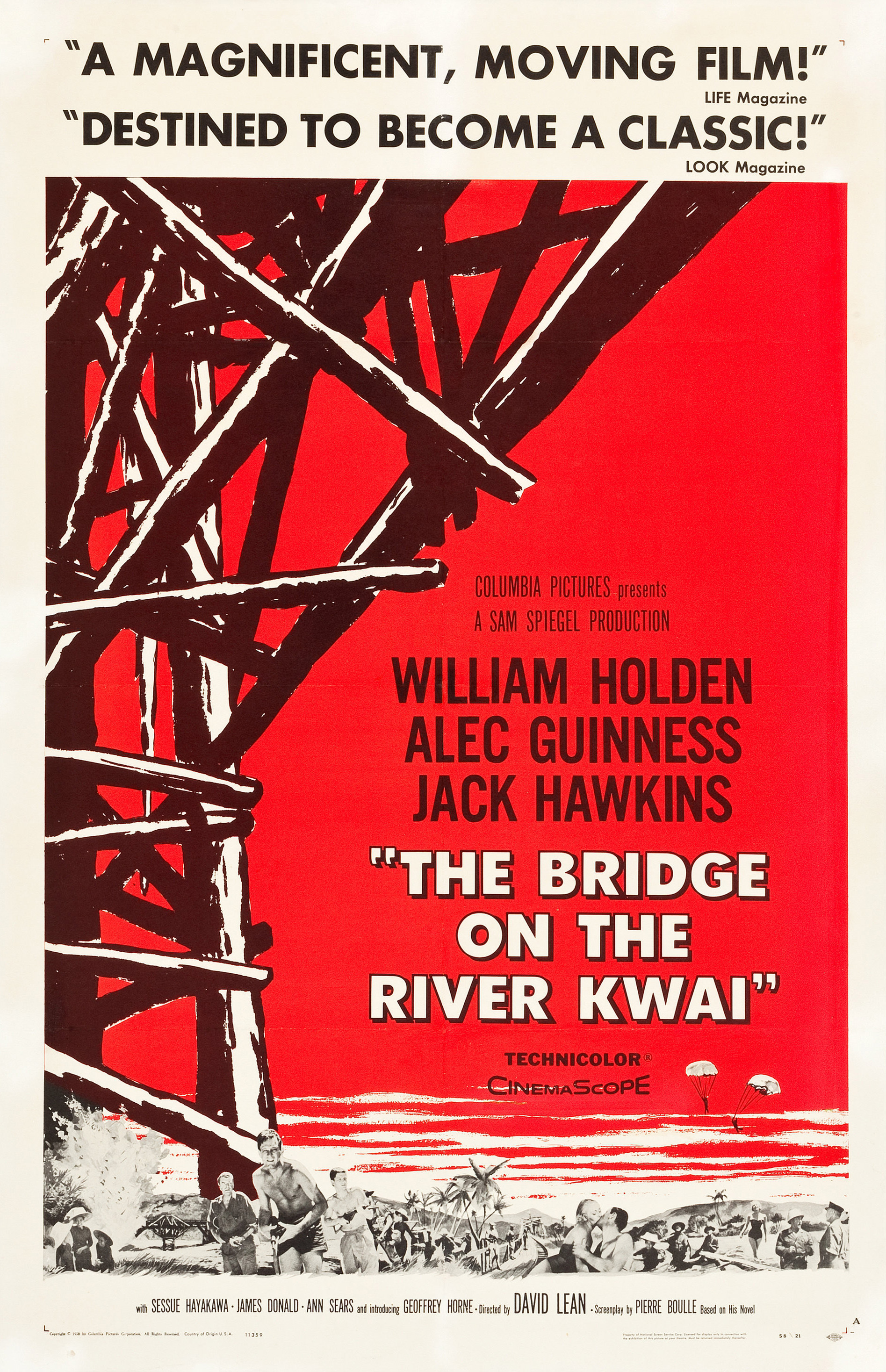
David Lean's The Bridge on the River Kwai from 1957 is one of the most absorbing war films ever made. Alec Guinness plays British Colonel Nicholson, who arrives at a Japanese prisoner-of-war camp determined to preserve military discipline and the dignity of his officers. Sessue Hayakawa's Colonel Saito is equally determined to break him, while William Holden's Shears becomes involved in an Allied mission to destroy the bridge the prisoners are being forced to build.
What makes the movie so rewatchable is that it is not a simple story of heroes against villains. Nicholson's determination initially helps his men survive and gives them purpose, but his pride gradually becomes an obsession. He wants the bridge to demonstrate British discipline and engineering, even though it will assist the enemy.
The ending delivers one of the most memorable final lines in any war film. After the bridge, train and nearly every major character have been consumed by the climax, Major Clipton, played by James Donald, surveys the destruction and says, “Madness! Madness!” Those two words perfectly summarize what he has witnessed: bravery, pride, duty and sacrifice becoming tangled in needless death and destruction.
I can enter the film almost anywhere - the prisoners marching into camp, Nicholson confronting Saito, the bridge taking shape or the final mission beginning - and immediately become involved again. The scale is impressive, but the conflict between duty, pride, survival and madness is what keeps me watching. Clipton's final words stay with me because they express the judgment the audience is left to make about everything that has happened.

The Shawshank Redemption from 1994 may be the ultimate channel-flipping movie. Written and directed by Frank Darabont from a Stephen King novella, it follows Andy Dufresne, played by Tim Robbins, after he is sentenced to life in prison. Morgan Freeman plays Red, the inmate who becomes Andy's closest friend and the narrator of the story.
This film is built around patience. Andy does not overcome his situation through physical strength or one dramatic act of rebellion. He survives by preserving his inner life, using his intelligence, helping other prisoners and refusing to allow the institution to define every part of him.
It is especially suited to television because nearly every part contains a complete emotional episode: the rooftop scene, the prison library, the opera broadcast, Brooks trying to live outside, Andy in solitary confinement or Red appearing before the parole board. I may know every major turn, but the story still creates the feeling that endurance can eventually open a path nobody else can see.
“I can barely sit still or hold a thought in my head. I think it is the excitement only a free man can feel, a free man at the start of a long journey whose conclusion is uncertain. I hope I can make it across the border. I hope to see my friend and shake his hand. I hope the Pacific is as blue as it has been in my dreams. I hope.”
That passage sums up the entire movie for me. Red begins as a man who has learned to protect himself by expecting very little. By the end, Andy has given him the courage to accept uncertainty and move toward something better.
The repetition of “I hope” is what makes the ending so powerful. Hope is no longer an abstract idea discussed inside prison; it becomes a journey, a border to cross and the possibility of seeing a friend again. The destination remains uncertain, but Red is finally willing to begin.

John Sturges' The Great Escape from 1963 brings together one of the strongest ensembles in a war movie: Steve McQueen, James Garner, Richard Attenborough, Charles Bronson, Donald Pleasence and James Coburn, among others. The prisoners are placed in a supposedly escape-proof German camp, and their response is to organize an escape on an extraordinary scale.
The movie turns planning and preparation into suspense. Digging tunnels, hiding dirt, forging documents, making civilian clothing and studying routes become acts of resistance. Each prisoner contributes a particular skill, and the plan works only because many people accept personal risk for a shared objective.
This is another movie I can join at almost any point. If the tunnels are being dug, I want to see whether they are discovered. If the escape has begun, I want to follow each group. If Steve McQueen is on the motorcycle, I already know I am staying until the end.
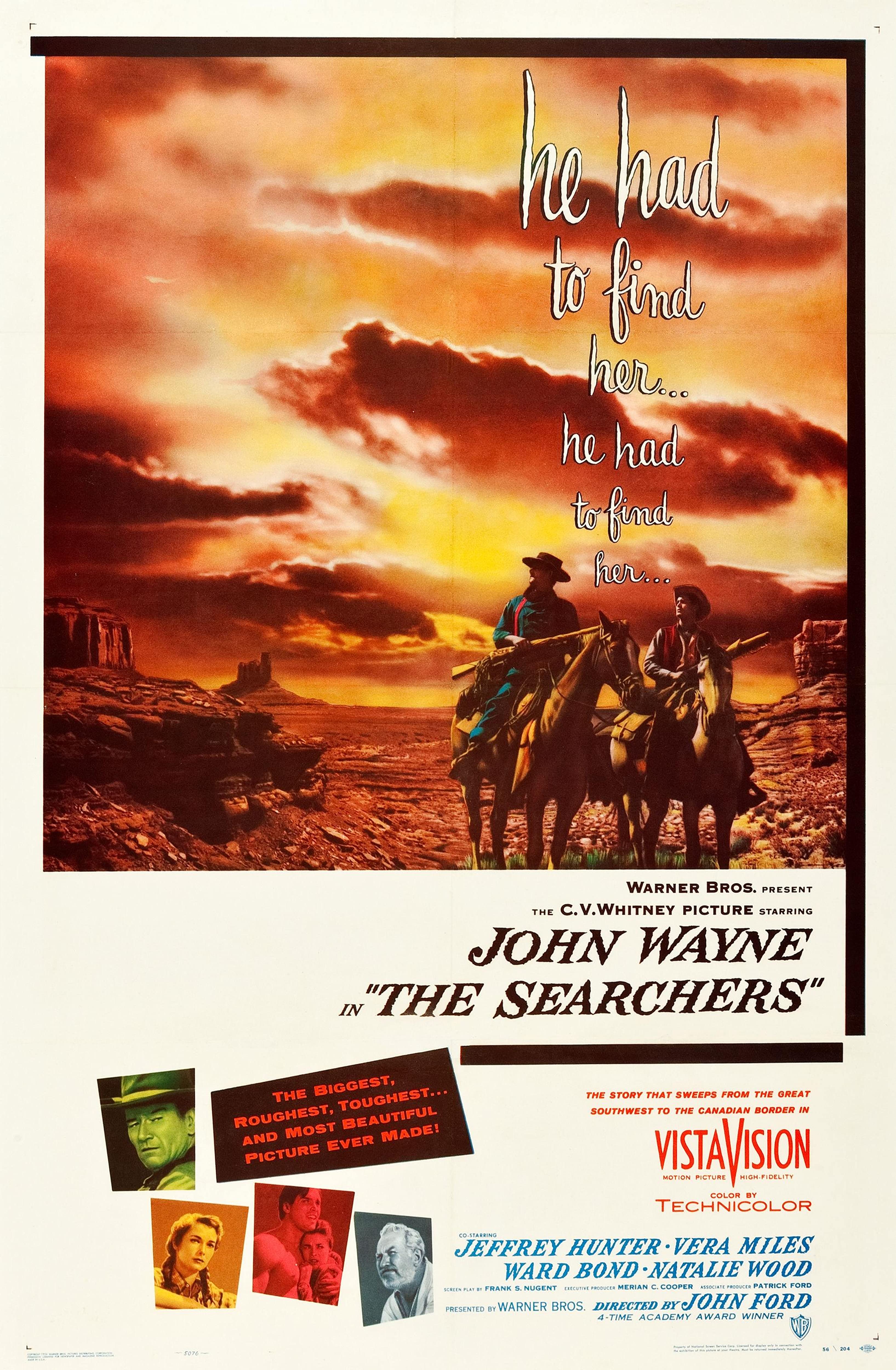
John Ford's The Searchers from 1956 is visually beautiful, but it is also one of the darkest and most complicated major Westerns. John Wayne plays Ethan Edwards, a Civil War veteran who begins a years-long search after members of his family are killed and his niece Debbie is abducted.
Ethan has the strength, experience and determination needed to continue across enormous distances and changing seasons. Yet he is not an uncomplicated hero. His hatred, bitterness and isolation make him dangerous, even to the people he claims to be rescuing. Jeffrey Hunter's Martin Pawley remains with him partly because Ethan cannot be trusted to decide Debbie's fate alone.
The final shot is one of the classic images in Western cinema. From inside the house, we watch Ethan standing alone in the bright doorway while the family gathers within. He has completed the search and brought Debbie home, but he remains outside the domestic world he helped restore.
John Wayne then turns and walks away as the door closes behind him. The composition says almost everything about Ethan without dialogue: he can rescue the family, but he cannot fully join it. He belongs to the open landscape rather than the home, and the view from inside the house makes his isolation even more powerful.
I can land on the movie during a quiet conversation, a Monument Valley landscape, a sudden attack or that final return home, and it immediately has a sense of weight. Ford's images are carefully composed, and Wayne's performance contains so much anger and loneliness that the film remains compelling even when I know every destination along the journey.
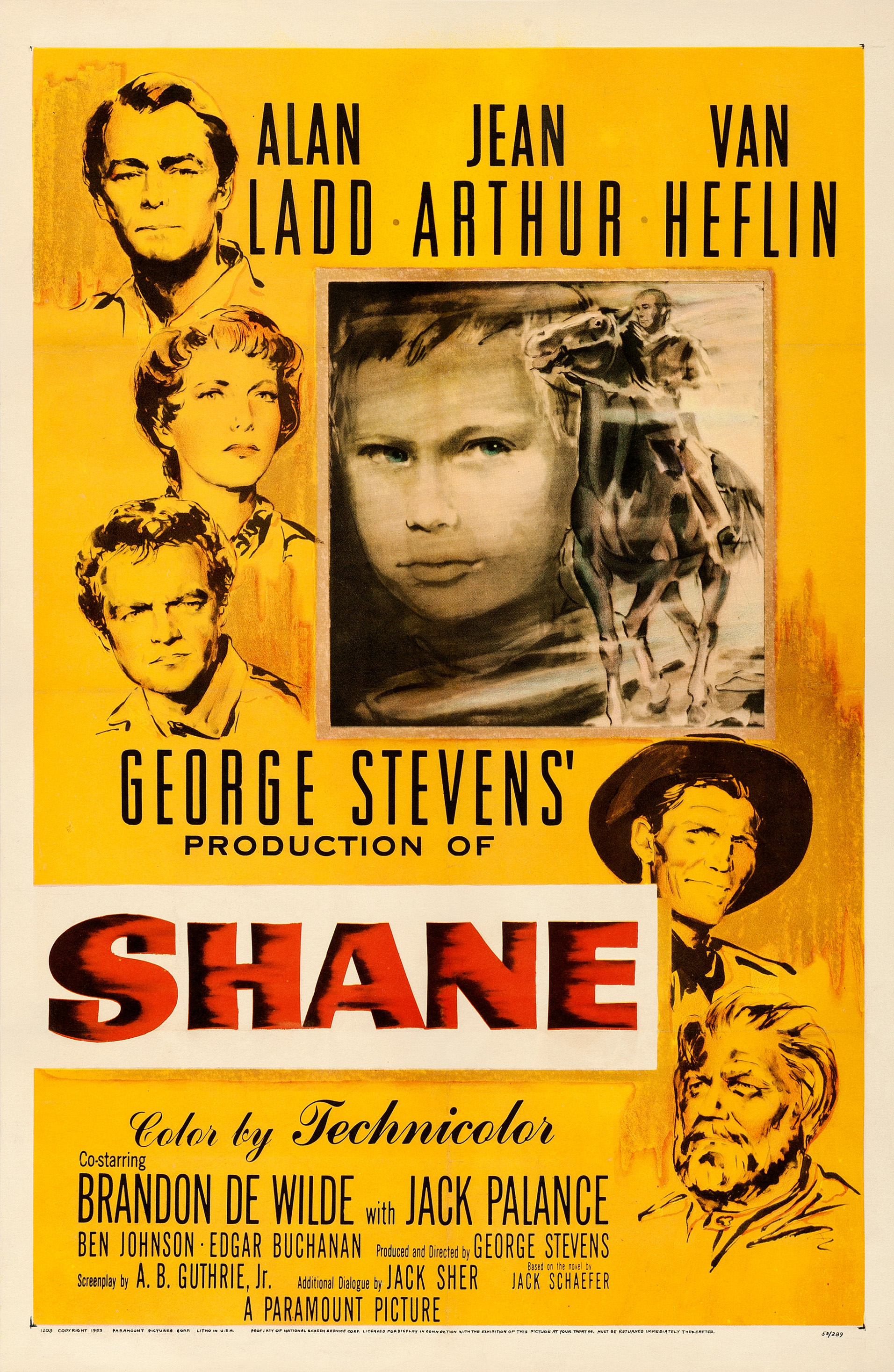
George Stevens' Shane from 1953 is a Western about a man who wants to leave violence behind but discovers that his skill with violence may be the only thing that can protect a family and its community. Alan Ladd plays Shane, the quiet gunfighter who is taken in by homesteaders Joe and Marian Starrett, played by Van Heflin and Jean Arthur.
The settlers face powerful rancher Rufus Ryker and the hired gun Jack Wilson, played with cold menace by Jack Palance. The homesteaders are outmatched in money, intimidation and force. Their resistance depends on courage, solidarity and eventually Shane's willingness to return to the part of himself he has tried to escape.
Brandon deWilde is essential to the film as Joey. His performance makes the bond between the boy and Shane believable without becoming overly sentimental. Joey watches Shane with complete admiration, and through him the audience sees both the appeal of the gunfighter and the sadness of a man who cannot remain inside the peaceful life he has helped protect.
The ending would not have the same emotional power without Joey calling after him, “Shane! Come back!” Shane has defeated the immediate threat, but Joey's voice makes clear what the victory has cost. The family is safe, yet the hero the boy loves is riding away and may never return.
Like the other movies on this list, Shane combines action with character and sacrifice. Once I encounter Shane riding onto the Starrett property, facing Wilson in town, preparing for the final gunfight or Joey calling after him at the end, I stay with the movie.
These five movies are not simply stories about winning. In several of them, victory is incomplete, costly or morally complicated. What they share is the sight of people continuing when surrender would be easier.
That complexity is one reason the films hold up. They offer courage without pretending that courage is simple. They show perseverance, but they also ask what people are willing to sacrifice, what they may lose along the way and whether determination always leads in the right direction.
Some movies depend heavily on surprise. Once the plot is known, much of the original effect disappears. These five work differently. Their value is not limited to finding out what happens. I return for the performances, dialogue, landscapes, music, pacing and moral choices.
Each film also has a strong dramatic engine that is easy to recognize immediately. Build the bridge. Preserve hope. Escape the camp. Find Debbie. Protect the homesteaders. Even if I enter halfway through, I know what is at stake and why the characters cannot simply walk away.
That may be the real definition of a channel-flipping classic. It does not require perfect timing or a planned movie night. A few images or lines of dialogue are enough. The film reminds you why you cared the first time, and suddenly the rest of the afternoon belongs to it.
Alan Hutchinson is the founder and owner of HTmarket.com. He graduated from Babson College in 1984 with a minor in film, built a dedicated screening room in 1996 and has worked in the home theater industry since 2000. He has watched more than 1,000 classic films, and his interests include film noir, Westerns, war films, classic Hollywood and cinema history.
American Film Institute Catalog: The Bridge on the River Kwai (1957)
American Film Institute: The Shawshank Redemption (1994)
American Film Institute: The Great Escape (1963)
American Film Institute Catalog: The Searchers (1956)
American Film Institute: Shane (1953)
Library of Congress: Complete National Film Registry Listing




.jpg)


