We know home theater - 26th Anniversary
Questions? CALL TOLL FREE 1-888-764-9273


Acoustic panels do not make your speakers louder. They help your speakers sound clearer by controlling unwanted sound reflections inside your home theater. Proper acoustic treatment can improve dialogue clarity, surround sound imaging, musical detail, and overall listening comfort.
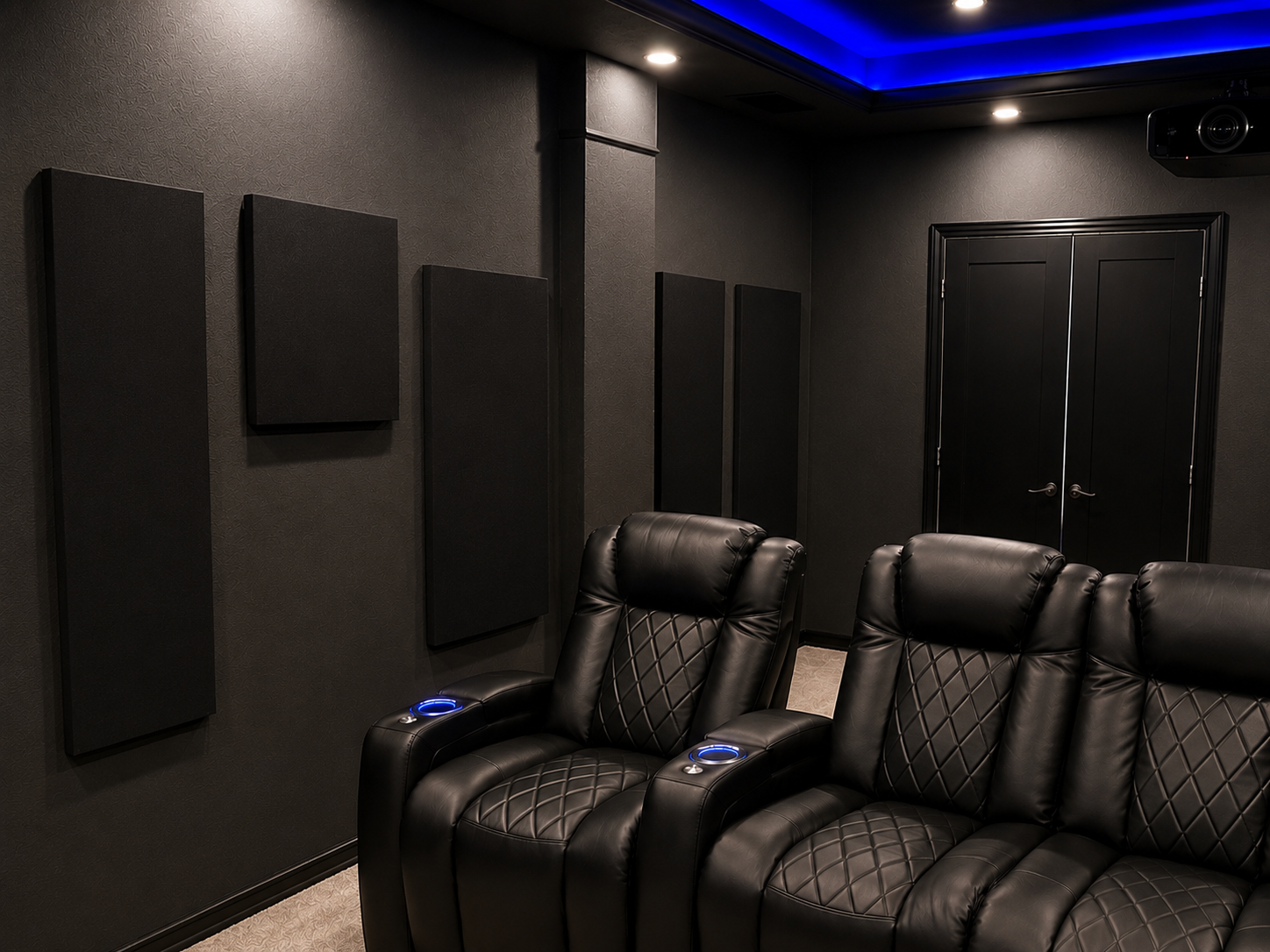
HT Design Acoustic Panels installed at key wall locations help control reflections, improve dialogue clarity, and create a more immersive home theater listening experience.
Sound from your speakers travels directly toward the seating area, but it also travels toward the walls, ceiling, floor, doors, and other surfaces in the room. Hard surfaces reflect that sound back toward the listener.
These reflections arrive slightly after the original sound from the speakers. When direct sound and reflected sound overlap, dialogue can become harder to understand, music can lose detail, and surround effects can sound less precise.
Acoustic panels absorb a portion of this reflected sound energy before it bounces back into the room. This allows you to hear more of the original soundtrack and less interference from the room itself.
The goal of acoustic treatment is not to eliminate every reflection. The goal is to control excessive reflections so the room sounds clear, balanced, and natural.
Dialogue clarity is one of the most noticeable benefits of proper acoustic treatment. Voices are usually reproduced by the center channel speaker, but sound from that speaker can reflect off nearby walls, the ceiling, and the floor.
When those reflections reach the seating position, they can overlap with the direct dialogue and make words sound muddy or indistinct. This is especially noticeable during action scenes, when music and sound effects compete with spoken dialogue.
Acoustic panels placed at important reflection points help reduce this interference. Voices become cleaner and easier to understand without constantly increasing the center channel volume.
A properly calibrated home theater should make sounds appear to come from specific locations around the room. Reflections can blur those locations and make the soundstage feel less precise.
Acoustic panels help preserve directional information from the front, center, surround, and overhead speakers. This can improve the accuracy of:
Instead of hearing a general wash of sound, you can hear individual effects and channels more clearly.
Rooms with drywall, glass, tile, hardwood, or other hard surfaces can produce noticeable echo and reverberation. This is sometimes described as a live, hollow, or ringing sound.
Acoustic panels reduce the amount of sound energy that continues bouncing around the room after the original sound has stopped. This can make the theater feel quieter and more controlled, even before the movie begins.
The improvement is often noticeable in normal conversation. Voices sound less harsh, and the room becomes more comfortable for extended listening.
Excessive reflections can make a home theater sound bright, harsh, or fatiguing. You may find yourself lowering the volume during loud scenes even though quieter dialogue is still difficult to hear.
By controlling reflections, acoustic panels can create a smoother and more balanced listening environment. This makes it easier to enjoy movies, sports, television, and music for longer periods without listening fatigue.
Acoustic treatment and soundproofing solve two different problems.
Improves the sound inside the room by reducing echoes and controlling reflections.
Reduces sound transmission between the theater and the rest of the building.
Acoustic panels alone will not stop deep bass or loud movie soundtracks from traveling through walls, ceilings, floors, doors, or ductwork.
Sound isolation normally requires specialized construction materials and techniques such as:
Dedicated home theaters often use both sound isolation and acoustic treatment because each serves a different purpose.
Acoustic panels are most effective when they are placed where strong reflections occur. Important treatment areas commonly include:
You do not need to cover every wall. A well-planned layout targets the most important reflection areas while preserving a natural amount of room ambience.
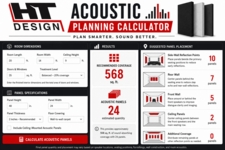
Use the HT Design Acoustic Panel Planning Calculator to estimate available wall area, subtract doors, windows, projection screens, and columns, and determine an appropriate amount of acoustic panel coverage.
Use the Acoustic Panel Planning CalculatorProfessional fiberglass acoustic panels provide more consistent sound absorption than thin decorative foam. The dense fiberglass core absorbs sound across a useful range of frequencies while maintaining a clean, furniture-quality appearance.
HT Design Acoustic Panels use a 6 lb. smooth-molded fiberglass core wrapped in premium Guilford of Maine fabric. Panels can be ordered in custom sizes to fit available wall space and coordinate with the design of your theater.
Explore acoustic panel sizes, fabrics, and design options for your home theater or media room.
View Acoustic PanelsThey can make the room sound more controlled by reducing echo and reverberation. They will not substantially prevent sound from traveling into adjoining rooms.
Standard wall panels primarily control midrange and higher-frequency reflections. Low-frequency problems may require thicker absorbers, bass traps, multiple subwoofers, careful placement, and electronic room correction.
Yes. Excessive absorption can make a room sound unnaturally dull. The best approach is to treat key reflection points and use an appropriate percentage of available wall area.
They can improve Atmos performance by reducing competing wall and ceiling reflections, allowing overhead and surround effects to sound more distinct and accurately positioned.
Guilford of Maine FR701 offers a classic professional acoustic-panel appearance. Anchorage 2335 offers a softer, more decorative furniture-style texture for luxury home theaters and media rooms.
Acoustic treatment is one of the most effective ways to improve an existing home theater system. By controlling unwanted reflections, properly placed acoustic panels help reveal the clarity, imaging, and detail your speakers are already capable of producing.