We know home theater - 26th Anniversary
Questions? CALL TOLL FREE 1-888-764-9273


HT Design Room Acoustics
Learn what acoustic panels do, where to place them, how many your room may need, which sizes and fabrics to choose, and how to create a cleaner, more immersive home theater listening experience.
Even an excellent speaker system can sound disappointing in an untreated room. Drywall, ceilings, windows, doors, and hard flooring reflect sound throughout the space, causing dialogue to sound muddy, surround effects to lose precision, and loud scenes to become harsh or tiring.
Acoustic panels help control those unwanted reflections. They do not replace proper speaker placement, calibration, or sound isolation, but they can significantly improve the clarity and balance of a home theater by reducing the effect the room has on the soundtrack.
This guide brings together the key information, planning tools, fabric options, and product resources needed to design an effective acoustic treatment layout for a dedicated theater, media room, listening room, office, or studio.
Sound travels directly from your speakers toward the seating area, but it also travels toward walls, ceilings, floors, doors, and other surfaces. These surfaces reflect sound back into the room.
The reflected sound reaches your ears shortly after the direct sound from the speakers. When the two overlap, voices can become harder to understand, musical detail can become less distinct, and directional effects can lose accuracy.
Acoustic panels absorb a portion of this reflected sound before it returns to the listening position. This helps you hear more of the original soundtrack and less interference created by the room.
Acoustic panels do not make speakers louder. They make the sound easier to hear by improving clarity, reducing echo, and preserving the directional information in the soundtrack.
Reduces reflections that can overlap with center-channel voices and make words sound muddy.
Helps sounds appear to come from more precise locations across the front, sides, rear, and ceiling.
Controls the room ringing and excessive reverberation caused by hard reflective surfaces.
Creates a smoother, less fatiguing listening environment during movies, sports, television, and music.
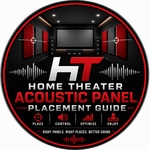
Effective acoustic treatment is based on placement, not simply covering every available wall. The most valuable locations are generally the areas where strong early reflections occur.
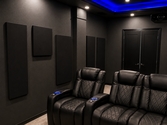
Often the highest-priority location because the side walls create first reflections from the front speakers.
Helps reduce sound returning toward the seating area, particularly when seats are near the back wall.
Can reduce reflections around the front speakers and behind an acoustically transparent projection screen.
Ceiling panels or acoustic clouds can reduce overhead reflections and improve overall clarity.
There is no single panel quantity that works for every room. The proper amount depends on the dimensions of the theater, the amount of exposed wall area, the number of hard surfaces, the speaker layout, and the type of sound you want to achieve.
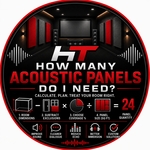
The most useful planning method is to calculate the total wall area, subtract doors, windows, projection screens, and columns, and then select an appropriate percentage of the remaining usable wall space for acoustic treatment.
A smaller media room with carpet, upholstered seating, and heavy drapes may require less treatment than a large room with drywall, tile, windows, and minimal soft furnishings.
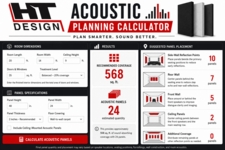
Enter your room dimensions, subtract doors, windows, the viewing screen, and columns, then compare panel sizes and coverage percentages.
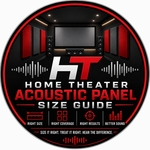
Open the Acoustic Panel CalculatorPanel size affects wall coverage, appearance, layout flexibility, and the number of panels required. Larger panels can cover open wall areas efficiently, while smaller panels can fit around doors, windows, columns, sconces, and other architectural features.
Common sizes include:
HT Design Acoustic Panels can also be built in custom sizes up to 48 inches by 48 inches, allowing a layout to be planned around the actual usable wall space rather than forcing the room to accommodate a limited selection of standard dimensions.
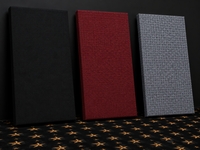
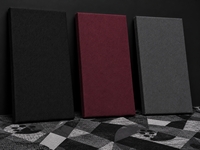
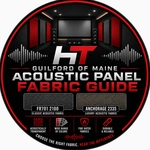
Read the Home Theater Acoustic Panel Size Guide →Fabric affects the appearance of the finished panel and must also allow sound to pass through to the absorptive fiberglass core. HT Design panels are available with premium Guilford of Maine fabric options selected for professional acoustic applications.
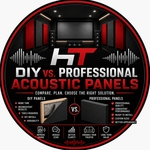
DIY acoustic panels can appear inexpensive, but the final result depends heavily on the fiberglass core, frame construction, edge quality, fabric tension, mounting method, and overall workmanship.
Professionally built panels provide consistent dimensions, properly wrapped fabric, hardened edges, clean corners, secure mounting hardware, and a finished appearance suitable for a dedicated theater or luxury media room.
| Feature | DIY Panels | HT Design Panels |
|---|---|---|
| Sizing | Depends on builder | Standard and custom sizes |
| Edges | Basic wood frame | Straight or half-bevel hardened edges |
| Fabric Finish | Hand stretched | Professionally wrapped |
| Installation | Hardware sourced separately | Impaling clips included |
Acoustic treatment improves sound quality inside the room. Soundproofing reduces the amount of sound traveling into or out of the room. These are related but separate goals.
Controls reflections, echo, reverberation, dialogue clarity, and imaging within the theater.
Uses construction methods to reduce sound transmission through walls, floors, ceilings, doors, and openings.
Use these guides, tools, and fabric galleries to plan your room before selecting panel sizes and quantities.
No. They improve the sound inside the room by controlling reflections. Soundproofing requires specialized construction designed to reduce sound transmission.
Yes. Reducing reflections from the center channel can make speech sound cleaner and easier to understand.
No. A well-designed layout targets important reflection points and an appropriate percentage of the available wall area.
Yes. Excessive absorption can make the room sound unnaturally dull. The objective is balanced control rather than eliminating all reflections.
FR701 provides a classic professional appearance. Anchorage 2335 offers a softer, luxury upholstery-style finish. Both are appropriate for acoustic panel applications.
Calculate your available wall area, compare panel sizes, explore fabric colors, and select custom HT Design Acoustic Panels for your home theater or media room.