
We know home theater - 26th Anniversary
Questions? CALL TOLL FREE 1-888-764-9273


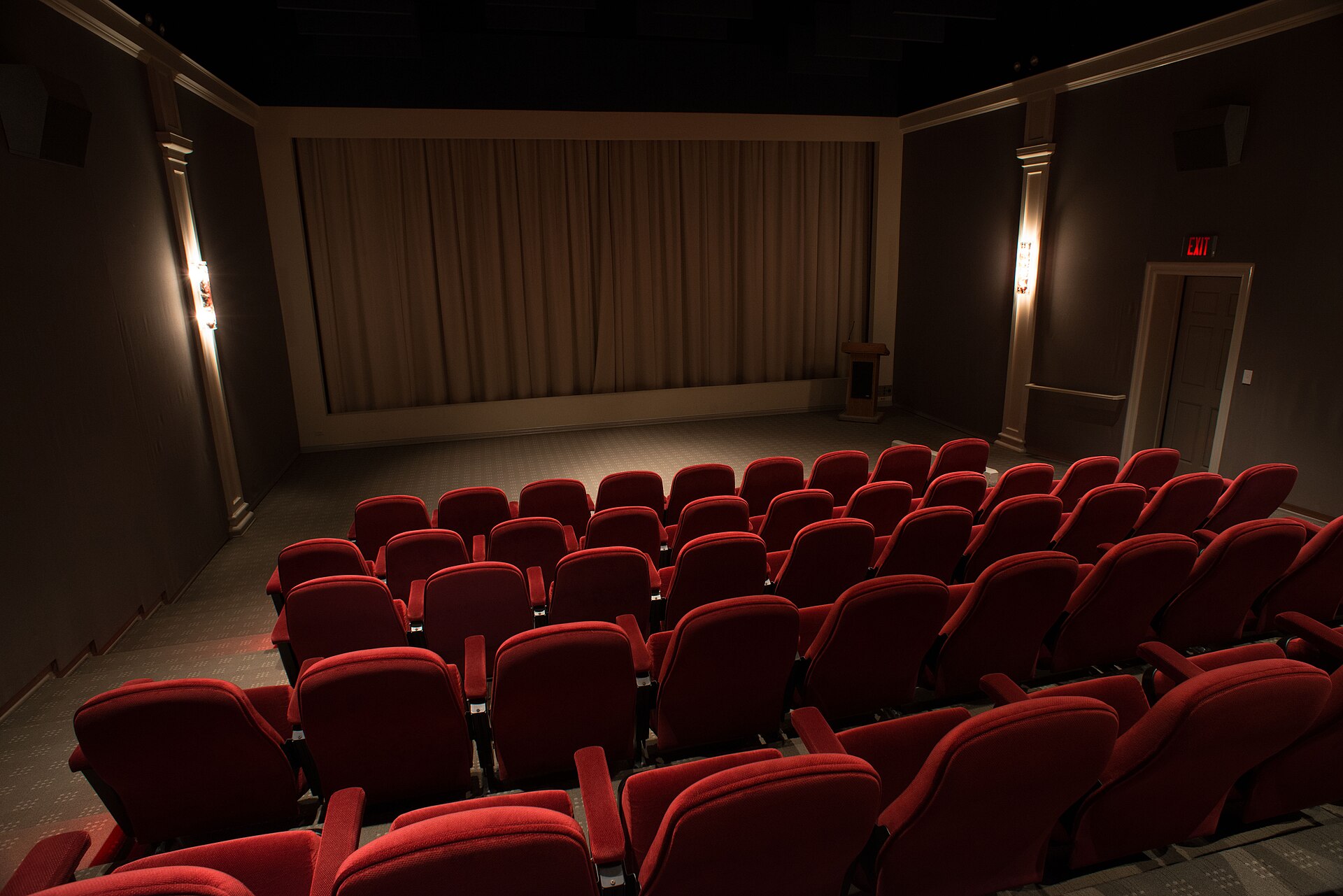
The modern home theater did not appear all at once. It developed through several overlapping traditions: private film screening rooms used by Hollywood executives and filmmakers, amateur 16mm and 8mm projection, television, high-fidelity audio, home video, large-screen projection, surround sound and eventually digital media and streaming.
The earliest rooms that most closely resembled today's dedicated home theaters were usually called screening rooms. They allowed studio executives, producers, directors, actors and wealthy film enthusiasts to view motion pictures privately. Many used the same basic equipment found in commercial cinemas: reel-to-reel film projectors, a projection booth or isolated equipment area, a fixed screen, controlled lighting and rows of comfortable seats.
These rooms were not yet a mass-market consumer product. They were professional facilities placed inside studios, offices and private homes. Nevertheless, they established the central idea behind home theater: recreating the movie-theater experience without leaving the residence.
During the studio era, a motion picture existed as a physical film print that had to be transported, threaded and projected. Studio executives needed private places to review completed films, works in progress and daily footage. Screening rooms were therefore practical business facilities as well as symbols of Hollywood status.
Some screening rooms were located on studio lots, while others were incorporated into executive offices or private residences. They commonly used 16mm or 35mm projectors, separate projection booths, theater screens, acoustic wall treatments and seating for invited guests. Filmmakers screened rough cuts, executives reviewed productions and guests attended private showings before films reached the public.
Commercial theaters generally projected 35mm film, but that format required large equipment and specialized handling. A major step toward movies in the home came in 1923, when Eastman Kodak introduced 16mm safety film together with the Cine-Kodak camera and Kodascope projector.
The smaller format was designed to be more affordable and portable. It allowed advanced hobbyists, schools, businesses and affluent households to shoot and project films without operating a full commercial projection booth. Because 16mm used a noncombustible safety-film base, it was also more suitable for residential and institutional use than early nitrate-based theatrical film.
Owners could project family movies, travel films, educational subjects and commercially distributed prints. Sound-on-film 16mm projectors later made it possible to reproduce synchronized dialogue and music through a dedicated speaker system. For decades, 16mm was the most practical way to create a true film screening room outside a commercial theater.

Kodak introduced 8mm film equipment in 1932 as a more economical alternative to 16mm. By the 1950s, 8mm cameras and projectors were common at vacations, birthdays and family gatherings. Most households used them to show their own home movies rather than full-length feature films, but the familiar ritual was already in place: darken a room, set up a screen, thread a projector and gather the family to watch moving images.
Super 8, introduced in 1965, made filming and projection easier through cartridge loading and more convenient equipment. Magnetic sound versions later allowed recorded sound to accompany the picture. Super 8 did not deliver the large, sharp image of a professional screening room, but it helped normalize the idea that motion pictures could be created and enjoyed at home.
The rapid spread of television after World War II changed home entertainment more than any earlier technology. Families no longer needed film, a projector or a darkened room to watch moving pictures at home. News, sports, comedy, drama and eventually feature films arrived through broadcast signals on a household television set.
Television made screen entertainment convenient, but early sets were relatively small and relied on built-in monaural speakers. The experience was fundamentally different from a cinema. During the following decades, larger color televisions, stereo systems and improved loudspeakers began moving the home experience closer to theatrical presentation.
Consumer videotape gave viewers control over scheduling. Cassette-based systems during the 1970s made recording and playback far easier than earlier open-reel machines. Betamax arrived in 1975, followed by the widespread adoption of VHS. Viewers could record television programs, rent movies and build personal video libraries.
Home video changed the meaning of movie ownership. A film was no longer something seen once in a theater or occasionally broadcast on television. It could be selected from a shelf, paused, rewound and watched repeatedly. This created the content foundation on which consumer home theater would grow.
A television could bring movies into the home, but a projection screen was necessary to reproduce the scale and visual impact of a cinema. Stewart Filmscreen, founded in 1947, developed professional projection surfaces for demanding applications and built close relationships with Hollywood studios, post-production facilities and screening rooms.
As residential home theater emerged, Stewart became one of the earliest and most influential companies to bridge professional screening-room technology and the home. Its custom fixed-frame screens, retractable screens, reference-quality materials and masking systems helped establish the large projection screen as the defining visual centerpiece of a high-end home theater.
For early enthusiasts using CRT projectors, a properly selected Stewart screen could improve brightness, color uniformity and perceived image quality while providing the cinema-scale picture that separated a dedicated home theater from a conventional television room. The projector might change several times, but a well-made screen could remain in the room for many years.
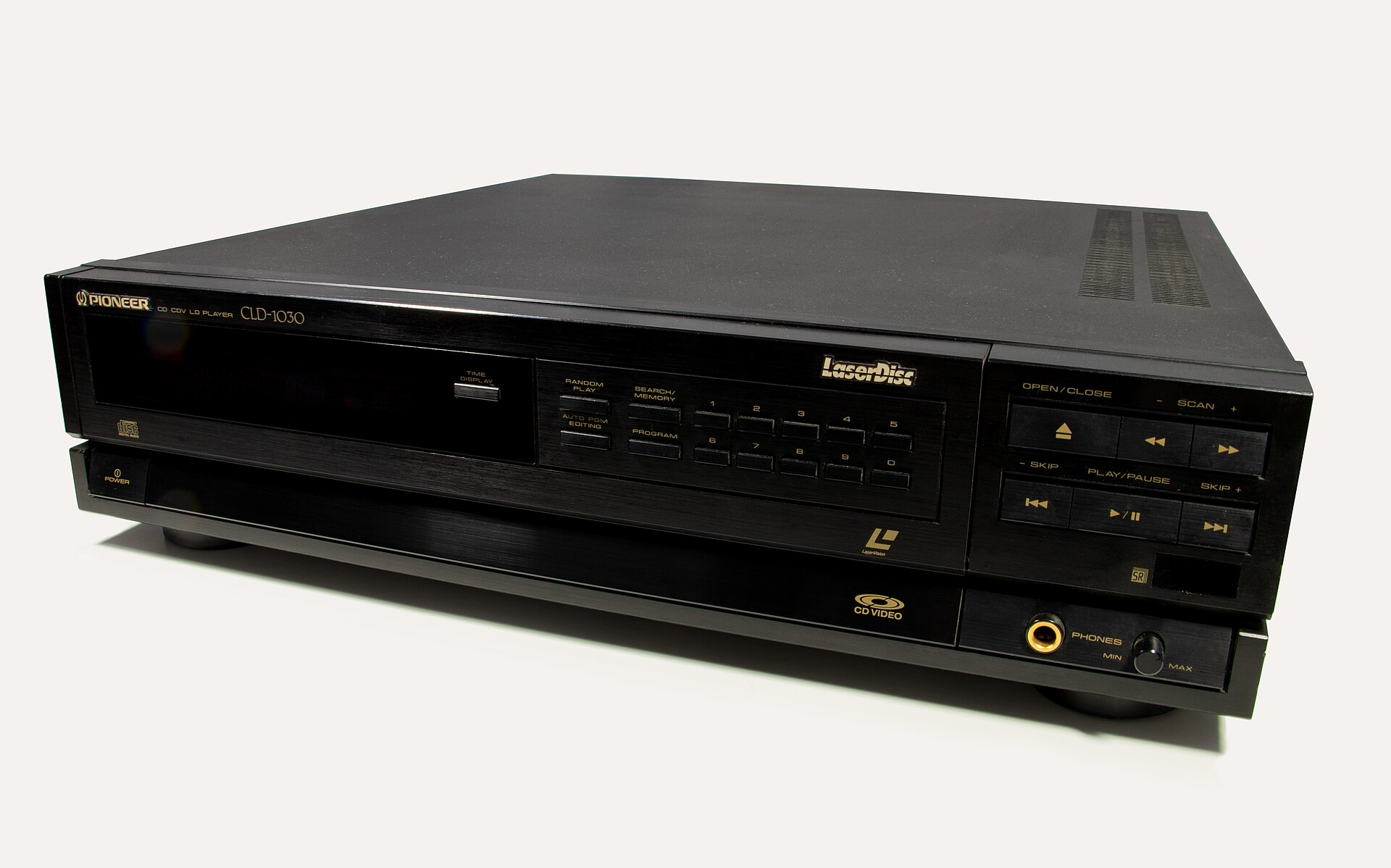
During the 1980s and early 1990s, serious movie enthusiasts began assembling systems that were recognizably modern home theaters. LaserDisc offered direct scene access, durable optical media and picture and sound quality that appealed to collectors, even though the large discs and relatively expensive players remained a specialty market.
At the same time, rear-projection televisions, front projectors and larger direct-view televisions allowed homeowners to create images far larger than the standard living-room screen. Separate audio components, powerful amplifiers and multiple speakers replaced the television's built-in sound.
This period also established many features that became associated with custom home theater: equipment racks, projection screens, light control, acoustic treatment, risers, theater seating and remote-control systems. Dedicated rooms remained expensive, but they were no longer limited to film-industry executives.
A large picture alone did not create a theater experience. Commercial cinemas had increasingly used multichannel sound to place dialogue at the screen, music across the front of the auditorium and effects around the audience. Consumer surround processors and audio/video receivers adapted that concept for residential systems.
The center speaker improved dialogue localization, surround speakers expanded the sound field, and powered subwoofers reproduced the deep bass associated with theatrical effects. Dolby Digital 5.1 later became closely associated with DVD, digital television and home theater, helping make multichannel playback a standard expectation rather than an exotic upgrade.
I built a dedicated screening room in the basement of his three-bedroom condominium in 1996. The system used of a used Barco CRT projector, Da-Lite projection screen, external video processing and an Atlantic Technology 5.1 surround-sound system. CRT projectors were the basis for most home theaters up until around year 2000 where digital projectors designed for widescreen came about.
My installation illustrates what a serious mid-1990s home theater required. CRT projectors were large, heavy and technically demanding. They used three projection tubes—red, green and blue—that had to be carefully aligned. External video processors helped improve source material for projection, while a dedicated screen, controlled lighting and properly placed speakers created a much more cinematic presentation than a conventional television room.
DVD accelerated the adoption of home theater during the second half of the 1990s. The compact optical disc was easier to store and use than videotape or LaserDisc, and it offered digital picture, multichannel sound, chapter access, alternate audio tracks and supplemental material.
As DVD players and movie titles became widely available, consumers had a convenient source capable of feeding digital surround-sound systems. Electronics manufacturers began marketing combinations of DVD players, audio/video receivers, speaker packages and larger displays as home-theater systems. The phrase home theater increasingly described both dedicated screening rooms and living-room systems designed to reproduce important elements of the commercial cinema experience.
HTmarket.com was founded in 2000, when buying specialized home-theater products online was still a new idea. The company began selling home theater seating online in 2001, making it one of the earliest internet retailers to treat theater seating as a dedicated product category rather than ordinary living-room furniture.
HTmarket's early role extended beyond seating. At a time when many audio/video stores concentrated almost entirely on electronics, HTmarket helped pioneer a complete-room approach to home theater. The online marketplace brought together the major elements needed to create the experience: theater seating, projector screens, equipment furniture, risers, carpeting, acoustic products, stage drapery, lighting, signs, movie posters, decor, concession equipment and installation accessories.
This approach recognized that a successful home theater is not created by a projector or sound system alone. Seating comfort, sightlines, room surfaces, light control, acoustics and decorative details all influence how the room looks, sounds and feels. From 2000 onward, HTmarket helped make those components available through one specialized online destination while providing planning assistance to customers building dedicated theaters and media rooms.
HTmarket later developed its own HT Design seating brand, combining practical room-planning experience with purpose-built home theater recliners. The company's history reflects a broader change in the industry: home theater evolved from a collection of expensive electronics into a coordinated room experience that could be planned, furnished and completed through a single specialist.
Digital display technology gradually replaced the CRT projector. LCD, DLP and later LCoS projectors were smaller, brighter and easier to install. Fixed-pixel imaging eliminated the need to align three separate CRT tubes, while digital video connections simplified the signal path.
High-definition television increased image resolution, and flat-panel televisions offered larger screens without the deep cabinets required by older rear-projection sets. Blu-ray Disc supplied high-definition movies with advanced surround formats, allowing a well-designed home system to reproduce considerably more detail than earlier VHS, LaserDisc or standard-definition DVD systems.
Streaming changed home theater again by replacing much of the physical media library with an on-demand digital catalog. Movies and television programs could be selected instantly without handling tapes or discs. Smart televisions, media players and network-connected receivers made the delivery system part of the theater itself.
Modern systems may combine 4K video, high dynamic range, laser projection, acoustically transparent screens and immersive sound formats with overhead speakers. They may also include power reclining seating, acoustic wall treatments, risers, automated lighting and motorized drapery. At the same time, a home theater can be simpler than ever: a large television, soundbar and streaming device can provide a basic cinematic experience in a multipurpose family room.
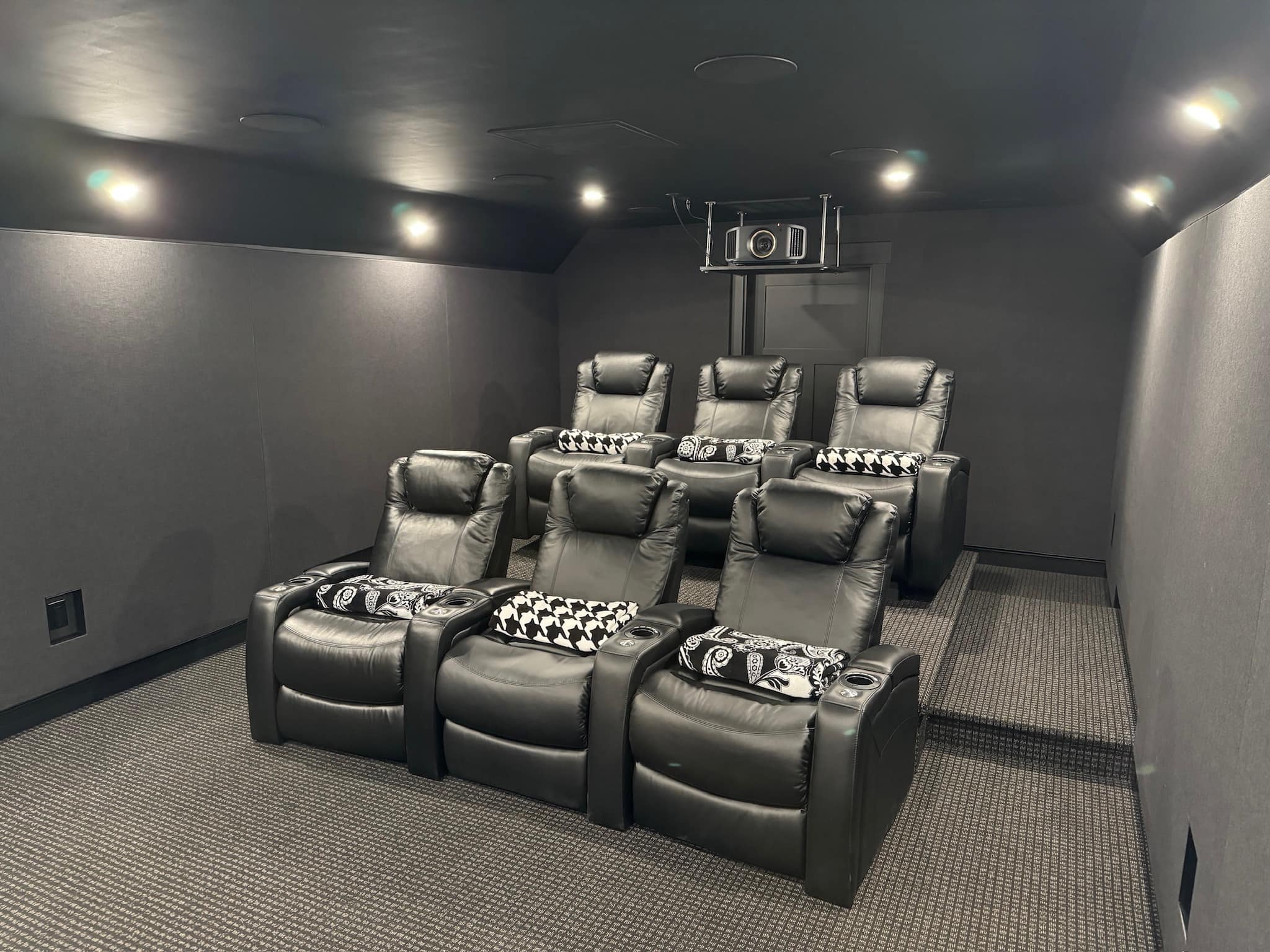
The equipment has changed dramatically, but the objective has remained consistent. A home theater separates movie watching from ordinary household distractions and gives the viewer greater control over image size, sound, lighting, seating and comfort.
The best modern theaters still follow principles found in early screening rooms: a clearly visible screen, controlled ambient light, equipment capable of presenting the source properly, sound directed toward the audience and seating arranged for comfortable viewing.
It is reasonable to trace the concept of home theater back to the private screening rooms of Hollywood studio executives, directors and producers. Those rooms brought cinema projection into a private environment and established the dedicated screen, controlled surroundings and invited audience that still define a home theater.
Modern home theater, however, was created by the convergence of many technologies and companies. Film projection introduced the private screening experience. Television made moving images an everyday household activity. Home video gave viewers control over content. Stewart Filmscreen helped bring true cinema-scale screens into residences. LaserDisc, DVD and Blu-ray improved source quality. Surround sound and digital projection reproduced more of the commercial cinema experience.
Beginning in 2000, HTmarket helped pioneer the next stage by making home theater a complete online room category. Instead of treating the theater as only an electronics system, HTmarket brought together seating, projection, room treatments, carpeting, drapery, lighting, decor and accessories so consumers could create the entire experience from one specialized source.

Alan Hutchinson is the founder and owner of HTmarket.com. He has worked in the home theater industry since 2000 and began selling home theater seating online in 2001. He built a dedicated CRT-projection screening room in 1996 and later founded the HT Design home theater seating brand. He graduated from Babson College in 1984 with a minor in film.




