We know home theater - 26th Anniversary
Questions? CALL TOLL FREE 1-888-764-9273


Professional home theater drapes need better planning than ordinary curtains. Use this guide to measure screen width, rod width, finished height, stackback, floor clearance, one-way draw, two-way draw, blackout coverage, screen masking, and motorized drape applications.
HTmarket.com home theater drapes are professional-style theater drapes supplied by our professional stage drapery partner with more than 50 years of experience serving theaters, auditoriums, schools, and performance venues. That means your measurements should be planned like a theater project, not like basic household curtains.
In a home theater, drapes may need to cover a projection screen, frame a screen border, black out windows, span a full front wall, or work with a BTX motorized drape system. Each use requires correct measurements before ordering.
The biggest mistake is only measuring the visible opening and forgetting stackback. If you want the drapes to open clear of the screen, you need enough rod width so the fabric can stack outside the viewing area.
Measure the width of the screen, window, wall opening, or area you want covered. For projection screens, measure actual screen width, not diagonal size.
Rod width must include the area being covered plus enough side room for stackback when the drapes are open.
Measure from the rod or mounting point down to the desired bottom height. For floor-length drapes, subtract clearance so the hem does not drag.
Decide if the drape opens from one side or splits in the center. This affects the layout, stackback, and finished appearance.
Choose blackout lined drapes for light control. Choose unlined drapes for decorative screen reveal or screen masking where light blocking is not required.
Choose manual rods or BTX motorized rods based on curtain weight, opening width, and whether you want automated operation from the seating area.
For theater drapes, the width measurement is what matters. Many customers know their screen by diagonal size, such as 100", 120", or 150". That is not the number you use to order drapes or plan rod width.
You need the actual screen width from left edge to right edge. This is especially important when planning screen reveal drapes, screen masking, and stackback.
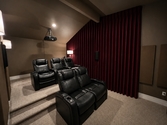
Screen reveal drapes open in front of the screen like a commercial theater. This creates the strongest classic cinema effect, especially when paired with a BTX motorized curtain rod.
For screen reveal drapes, the key measurement is the total rod width. The rod should be wide enough that the drapes can open and stack outside the screen image area. If the rod is too narrow, the curtains will block the image even when open.
Drapes can also be used as a screen masking treatment around the border of the screen. This helps frame the image, cover unused screen area, hide extra side space, and create a cleaner front wall presentation.
Screen masking measurements are different from basic window curtain measurements because you may be covering only part of the wall or border area. You need to know the visible image area, the screen border area, and how much space you want the drape to cover when closed.
Measure the visible image width and height. This tells you what must remain uncovered when the masking is in position.
Measure the border, side gap, or unused screen area you want covered by the drape treatment.
Even masking drapes need room to move and stack. Make sure the open drapes do not interfere with the image.
Motorized operation is useful when the masking is part of the main screen wall presentation or when the drapes will be adjusted often.
Blackout lined drapes are used when light control matters. In a home theater, that usually means windows, glass doors, side openings, walkout basement doors, or any bright area that affects picture quality.
For window applications, measure wider and taller than the glass itself. As a general rule, end brackets should be mounted at least 4" from each side of the window and at least 4" above the window. This helps reduce light leakage and hides hooks and pleats better from outside.
If you want better light control, do not measure tight to the window trim. Give the drapes enough coverage beyond the glass.
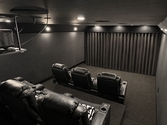
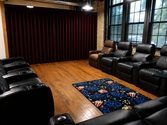
Wall-to-wall drapes can create a strong theater look, especially on the front wall. They can hide screen borders, equipment areas, wall imperfections, side speakers, or open space around the screen.
For wall-to-wall curtains, mount the end brackets about 1" from the side walls to allow for drapery returns. Measure the full span carefully, and plan whether the drapes will open from the center or pull to one side.
| Draw Type | How It Works | Best Use |
|---|---|---|
| One-Way Draw | One drape panel pulls to one side. | Good when there is enough stackback space on one side or when the room layout favors one-sided operation. |
| Two-Way Draw | Two drape panels split in the middle and open left and right. | Best for classic theater screen reveals, screen walls, and balanced front-wall presentation. |
Finished height is the final height of the drape. Measure from the rod or track location down to where the drape should end.
For floor-to-ceiling curtains, subtract at least 1" from the total height to keep the bottom hem from dragging on the floor. This is especially important with heavier professional theater drapes because dragging fabric can affect operation and appearance.
Measure to the floor, then subtract at least 1" for clearance.
Measure to the desired bottom point below the window or to the floor if using full-length blackout drapes.
Measure from the track or rod location down to the bottom point needed for the screen wall treatment.
BTX motorized rods are a strong option for home theater drapes, especially when the curtains are heavier, wider, used for screen reveal, or part of the main front wall presentation.
When measuring for motorized drapes, do not only think about the fabric. The rod width, draw type, stackback, fabric weight, lining, and height all affect how the system operates.
Diagonal screen size is not the same as screen width. Always measure actual width for drape planning.
If you do not add enough rod width for stackback, the open drapes may cover part of the screen.
Tight measurements can cause light leakage, poor coverage, or a skimpy look.
Fabric, lining, fullness, and width affect weight. This matters for motorized rods.
Floor-length drapes should usually be slightly above the floor so they hang and operate properly.
Fabric color can shift in theater lighting. Samples help avoid the wrong color choice.
Measure the actual screen width. Diagonal screen size is not the correct measurement for drape width, rod width, or stackback planning.
For floor-to-ceiling drapes, subtract at least 1" from the total height so the bottom hem does not drag on the floor.
Stackback is the space occupied by the drapes when they are open. It is critical for screen curtains because you want the open drapes to clear the viewing area.
Two-way draw is most common for classic theater screen reveals because the drapes split in the middle. One-way draw works when the layout calls for the drape to stack on one side.
Yes. Drapes can frame the screen border, hide unused screen area, cover extra side space, and create a cleaner professional theater presentation.
The basic measurements are similar, but motorized drapes require more attention to rod width, stackback, drape weight, draw type, and how the system will operate.
Professional home theater drapes need proper measuring. The big items are actual screen width, rod width, stackback, finished height, draw type, lining choice, and whether the drapes will be manual or motorized.
Do not guess from diagonal screen size, and do not ignore stackback. If the drapes are going in front of a screen, around a screen border, or across a full theater wall, proper planning is what makes the installation look right.