We know home theater - 26th Anniversary
Questions? CALL TOLL FREE 1-888-764-9273


Home theater drapes can do two very different jobs: block light or create a classic cinema look. Blackout lined drapes are best for light control. Decorative unlined drapes are best for screen reveal, screen masking, and theater styling when full blackout performance is not required.
The right drape depends on what you are trying to accomplish. If outside light is hurting your picture quality, you need blackout lined drapes. If the goal is to create a classic theater look in front of the screen, decorative unlined drapes may be the better choice.
HTmarket.com home theater drapes are professional-style theater drapes supplied by our professional stage drapery partner with more than 50 years of experience serving theaters, auditoriums, schools, and performance venues. These are not ordinary retail curtains. They are made for theater-style presentation, larger openings, screen walls, and specialty room applications.
The mistake is assuming all theater curtains should be blackout lined. That is not always true. Blackout lining is excellent for windows and light control, but it may not be necessary for decorative screen reveal or masking use.
Blackout lined drapes are designed to reduce light entering the room. In a home theater, this matters because outside light can wash out the picture, create reflections, and reduce contrast.
Use blackout lined drapes for windows, glass doors, side openings, walkout basement doors, or any bright area that affects the theater experience. If the room is used during the day or has unavoidable light sources, blackout lining is usually worth it.
Blackout lined drapes are heavier than unlined drapes, so rod strength, stackback, and motorized operation should be planned carefully.
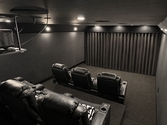
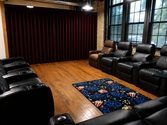
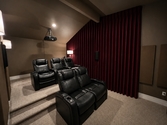
Decorative theater drapes are used when the main goal is the look and presentation of the room. These drapes can be placed in front of the screen for a classic theater reveal, used around the screen border for masking, or installed across the front wall for a true cinema effect.
Decorative drapes are often unlined because they do not always need to block light. They are there to frame the screen, soften the room, hide wall space, and create the feeling of a real theater.
If the drapes are not covering a window or glass area, blackout lining may be unnecessary. That can reduce weight and make operation easier, especially for screen reveal applications.
| Feature | Blackout Lined Drapes | Decorative Unlined Drapes |
|---|---|---|
| Main Purpose | Block light and improve room darkening | Create classic theater look and screen presentation |
| Best Location | Windows, glass doors, bright openings | Screen wall, front wall, screen reveal, masking areas |
| Best For Projection | Reducing outside light that washes out the picture | Framing the screen and improving the theater appearance |
| Weight | Heavier because of added lining | Lighter than blackout lined drapes |
| Motorized Use | Works with proper BTX motorized planning | Often easier to motorize due to lower weight |
| Screen Reveal | Can be used, but lining may not be necessary | Often the better choice for decorative screen reveal |
| Screen Masking | Can work if blackout performance is needed | Usually a strong choice for border and side masking |
Choose blackout lined drapes when light control is the job. If sunlight, streetlights, porch lights, glass doors, or bright side windows affect the picture, blackout drapes are the practical choice.
If the room is used during the day, blackout drapes help reduce light and improve picture contrast.
Side windows near the front of the room can wash out the image. Blackout drapes help control that problem.
Walkout basement doors and patio doors often need blackout coverage in a theater or media room.
Light from behind the seating area can reflect back toward the screen. Blackout drapes can help reduce it.
Media rooms that are not fully dedicated theaters often need blackout treatment for flexible viewing times.
If the goal is the darkest possible viewing environment, blackout lining should be strongly considered.
Choose decorative theater drapes when the goal is presentation. These drapes make the room look like a cinema, especially when used on the front wall or in front of a projection screen.
Drapes open in front of the screen before viewing, creating the classic movie theater effect.
Drapes can cover side space, unused screen area, or borders to visually frame the image.
Full wall drapes can hide the surrounding wall area and create a dramatic theater presentation.
Red, burgundy, black, or dark theater-style drapes can completely change the feel of the room.
Drapes can visually soften or hide side areas, unused wall space, and parts of the front wall.
If blackout lining is not needed, unlined drapes are lighter and often easier to operate.
Drapes are not only for opening and closing in front of a screen. They can also be used around the screen border as a masking treatment. This helps frame the image, hide unused screen area, cover side gaps, and create a cleaner professional theater presentation.
For screen masking, decorative unlined drapes are often enough. You usually do not need blackout lining unless the drapes are also covering a light source. The main job is visual control, not light blocking.
Screen masking needs careful measuring. You need to know the visible image area, the border or side area you want covered, the rod width, and the stackback space. If the masking is motorized, the rod and track system should be planned with the drape weight and movement.
BTX motorized rods can be used with both blackout lined and decorative theater drapes. The difference is weight and purpose. Blackout lined drapes are heavier, so the motorized system must be matched to the drape size, lining, fullness, and opening width.
Decorative unlined drapes are often easier to motorize because they are lighter. That makes them a good fit for screen reveal, screen masking, and front wall applications where the drapes are moved for presentation rather than light blocking.
Best when you want easy room darkening for windows, glass doors, or bright openings. Plan carefully because blackout lining adds weight.
Best for screen reveal, screen masking, and cinema-style front wall presentation. Usually lighter and easier to operate.
Whether you choose blackout lined or decorative unlined drapes, the quality of the drape matters. HTmarket.com drapes come from our professional stage drapery partner, not a basic curtain retailer.
Our partner's drapery workroom is fully equipped with modern machines, giving them the ability to produce projects both big and small economically and efficiently. Their experience includes theaters, auditoriums, schools, performance venues, and projects ranging from the historic Chicago Theatre to stages around America.
That matters because home theater drapes are often larger, heavier, and more visually important than ordinary curtains. The product has to look right and hang right.
Blackout lining is useful, but not always needed. For decorative screen reveal or masking, unlined drapes may be a better fit.
If the job is blocking sunlight or bright window light, decorative unlined drapes are usually not enough.
Blackout lining adds weight. That affects rod choice, stackback, and motorized operation.
Drapes need room to stack when open. Without stackback planning, they may cover part of the screen.
Drape planning uses actual screen width, not diagonal screen size.
Fabric color looks different in different rooms. Samples help avoid the wrong color choice.
No. Blackout drapes are better when light control is needed. For decorative screen reveal or screen masking, unlined drapes can be the better choice.
Use blackout lined drapes over windows, glass doors, walkout basement doors, or any bright area that affects picture quality.
Use decorative unlined drapes for screen reveal, screen masking, front wall theater treatment, and classic cinema styling where light blocking is not required.
Yes. Decorative drapes are often used in front of a projection screen for a classic theater reveal. The key is planning rod width and stackback correctly.
Yes. Drapes can frame the screen border, hide unused screen area, cover side gaps, and create a cleaner theater presentation.
Yes, but blackout lined drapes are heavier. For motorized installations, use a proper system like BTX and plan the drape size, weight, draw type, and stackback.
Yes. Fabric color changes depending on room lighting, wall color, carpet, seating, and screen light. Samples are strongly recommended before ordering custom drapes.
Blackout lined drapes and decorative theater drapes are both useful, but they solve different problems. Use blackout lined drapes when you need to control light. Use decorative unlined theater drapes when you want screen reveal, screen masking, or a more classic cinema presentation.
The right choice depends on the room, the screen, the amount of light, the drape location, and whether you want manual or BTX motorized operation.