We know home theater - 26th Anniversary
Questions? CALL TOLL FREE 1-888-764-9273


Use this home theater drape calculator to estimate rod width, stackback space, finished drape coverage, and drape height for custom theater curtains. This works for screen curtains, blackout curtains, wall curtains, window curtains, and classic cinema-style drapes.
Enter your screen width, window width, or wall opening width. The calculator estimates the stackback space needed so the open drapes do not cover your screen or opening.
This calculator uses HTmarket.com stackback chart logic. Final rod width, finished height, draw type, and stackback should be confirmed before ordering custom drapes or motorized tracks.
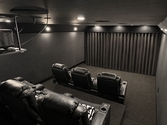
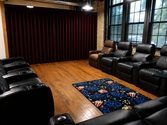
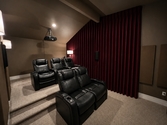
Home theater curtains are a great way to keep light out of a dedicated theater room or provide a dramatic covering for your screen like the old-style cinemas. If you need to block light, order blackout lined curtains. If the drapes are used mainly as a decorative screen covering, unlined curtains can be used.
Make your home theater feel like the theaters of yesterday with quick ship and custom home theater drapes in velvet. Choose from over 60 fabric colors. These drapes are custom made to your specifications with a 3-prong pinch pleat.
We offer microfiber suede and velour at 100% fullness. Fullness refers to the pleating in the drape. You can order fabric samples directly from our site before choosing your final color.
You will need either motorized drape kits or manual curtain rods to complete your installation.
Use blackout lined drapes when light control matters. They are best for windows, room darkening, side wall light control, and improving the viewing environment in a dedicated theater room.
Use unlined drapes when the goal is decorative screen coverage or a classic cinema look. Unlined drapes are often used in front of a screen when full blackout performance is not needed.
Measure the rod length and specify whether you want a one-way draw or two-way draw. A one-way draw uses one drape that pulls to one side. A two-way draw uses two drapes that split in the middle.
We automatically add 6" of material for a one-way draw and 12" of material for a two-way draw so the drape is properly fitted.
Theater drapes can be installed with manual curtain rods or motorized drape tracks. For heavier velour theater drapes, track quality matters. A stronger custom motorized track is a better choice than lightweight imported tracks that may struggle with the weight of full theater draperies.
Motorized drapes are especially useful when the curtains are used in front of a projection screen. They give the room a classic cinema effect and make it easier to open and close the drapes from the seating area.
Stackback is the amount of space occupied by your draperies when they are open. This must be determined before buying traverse rods or ordering draperies.
Stackback varies depending on screen size, fullness, fabric, lining, and draw type. The chart below is a guide for determining your rod face if you want the screen fully exposed when the draperies are open.
The chart is for average fullness and fabric for two-way draw draperies. For one-way draw draperies, deduct 7" from the stackback dimensions.
| Screen Width Not Diagonal |
Recommended Stackback | Recommended Rod Width / Drape Coverage |
|---|---|---|
| 20" | 20" | 40" |
| 26" | 22" | 48" |
| 32" | 24" | 56" |
| 38" | 26" | 64" |
| 44" | 28" | 72" |
| 50" | 30" | 80" |
| 56" | 32" | 88" |
| 62" | 34" | 96" |
| 68" | 36" | 104" |
| 75" | 37" | 112" |
| 81" | 39" | 120" |
| 87" | 41" | 128" |
| 94" | 42" | 136" |
| 100" | 44" | 144" |
| 106" | 46" | 152" |
| 112" | 48" | 160" |
| 119" | 49" | 168" |
| 125" | 51" | 176" |
| 131" | 53" | 184" |
| 137" | 55" | 192" |
| 144" | 56" | 200" |
| 150" | 58" | 208" |
| 156" | 60" | 216" |
| 162" | 62" | 224" |
| 169" | 63" | 232" |
| 175" | 65" | 240" |
| 181" | 67" | 248" |
| 187" | 69" | 256" |
| 194" | 70" | 264" |
| 200" | 72" | 272" |