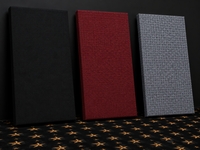
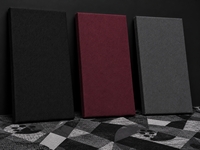
Typical DIY Panel
A DIY panel usually consists of a wood frame, an absorptive fiberglass or mineral-wool core, fabric, mounting hardware, and sometimes a rear fabric or backing layer.


Compare homemade acoustic panels with professionally manufactured panels, including materials, sound absorption, appearance, safety, installation, durability, custom sizing, and total project cost.
DIY acoustic panels can reduce project costs for homeowners who have the tools, time, workspace, and experience needed to build consistent frames and wrap fabric correctly.
Professionally manufactured acoustic panels cost more than raw building materials, but they provide predictable construction, finished edges, consistent dimensions, purpose-selected acoustic materials, and a cleaner installed appearance.
Neither option is automatically right for every room. The best choice depends on your budget, construction ability, required panel quantity, design expectations, and how important long-term appearance is to the finished theater.
A DIY panel usually consists of a wood frame, an absorptive fiberglass or mineral-wool core, fabric, mounting hardware, and sometimes a rear fabric or backing layer.
Building a square wood frame is only one part of the job. A finished acoustic panel also needs clean fabric tension, consistent corners, safe handling of the absorption material, reliable mounting, and dimensions that remain uniform across the installation.
Uneven cuts, warped lumber, visible fasteners, or frames that are not square can become noticeable when several panels are installed in a straight row.
Loose fabric, puckered corners, misaligned weave, and uneven tension can make otherwise functional panels look unfinished.
Homemade mounting systems must hold the panels securely while keeping rows straight, level, and consistently spaced.
A professional acoustic panel is manufactured as a complete finished product using controlled dimensions, selected acoustic materials, consistent edge construction, and purpose-designed fabric.
Matching dimensions, fabric tension, edge profiles, and corners create a more consistent wall installation.
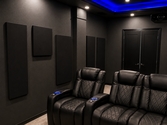
Finished edges and carefully wrapped fabric help the treatment look like part of the theater architecture rather than a temporary add-on.
The panels arrive completed, eliminating frame construction, fiberglass cutting, fabric wrapping, and finishing work.
The table below compares the two approaches across the factors that matter most in a dedicated home theater or finished media room.
| Comparison | DIY Acoustic Panels | Professional Acoustic Panels |
|---|---|---|
| Initial material cost | Usually lower | Higher completed-product cost |
| Labor requirement | Cutting, assembly, wrapping, and mounting | Panels arrive completed and ready to install |
| Tools and workspace | Required | Not required for panel construction |
| Dimensional consistency | Depends on builder skill and materials | Controlled and repeatable |
| Fabric appearance | Depends on wrapping technique | Consistent tension and finished corners |
| Edge options | Usually basic wood-frame edges | Straight or decorative finished-edge options |
| Custom sizing | Possible with additional labor | Available as part of the order |
| Acoustic material | Varies by builder and local availability | Selected for the panel design |
| Installation hardware | Must be selected or fabricated | Provided with the panel system |
| Best application | Budget projects, hobby builds, and utility rooms | Finished theaters and media rooms |
The performance of an acoustic panel depends on the complete assembly, including the absorption material, thickness, density, fabric, frame, edge treatment, placement, and total wall coverage.
DIY builders commonly use rigid fiberglass or mineral wool. Performance depends on the specific product, density, thickness, mounting method, and air gap.
The fabric should allow sound to pass into the absorptive core. Dense upholstery fabrics, vinyl, or backed materials may reflect more sound than intended.
Frames and edges should remain straight and durable while supporting the fabric without sagging, bowing, or visible irregularities.
Fiberglass and mineral-wool products should be handled according to the material manufacturer's instructions. Cutting and installing these materials may require protective clothing, gloves, eye protection, ventilation, and respiratory protection.
DIY panels can reduce the direct cost of each finished panel, but raw material prices do not represent the complete project cost.
The cost advantage of DIY construction is greatest when the builder already owns the tools, has a suitable workspace, can purchase materials efficiently, and values the labor as part of the project.
The cost difference becomes smaller when tools must be purchased, materials must be shipped in small quantities, fabric is wasted during wrapping, or panels must be rebuilt because of uneven frames or imperfect corners.
Acoustic panels occupy a substantial amount of visible wall space. Small differences in frame dimensions, fabric tension, panel depth, corner wrapping, and spacing become easier to see when multiple panels are installed together.
Panels that vary slightly in width, height, or depth can appear uneven when aligned along a wall.
Consistent weave direction and fabric tension help create a professional installation under theater lighting.
Straight or beveled edges can give the acoustic treatment a more intentional architectural appearance.
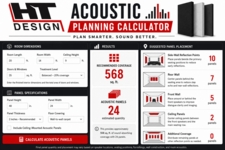
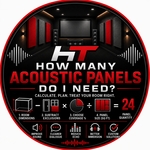
Use the HT Design Acoustic Planning Calculator to measure usable wall area, subtract doors, windows, the viewing screen, and columns, then determine the number and sizes of panels needed for your desired level of treatment.
DIY panels can be effective when they use suitable absorptive materials, breathable fabric, proper dimensions, and correct placement. Performance depends on the materials and construction.
Professional panels provide more predictable construction, dimensions, fabric finishing, edge quality, and appearance. A properly built DIY panel may still provide useful absorption.
Common materials include rigid fiberglass or mineral wool, a wood frame, breathable fabric, fasteners, backing material, and mounting hardware.
Some upholstery fabrics are too dense or have backings that can reflect sound. A breathable acoustic fabric is generally a safer choice for covering an absorptive panel.
Raw material costs are usually lower, but the complete cost should include tools, shipping, fabric waste, labor, workspace, cleanup, mounting hardware, and possible rework.
Yes. HT Design manufactures custom acoustic panel dimensions up to 48 inches by 48 inches.
Acoustic performance depends on the complete panel construction and placement. Professional panels provide predictable materials and manufacturing, while DIY performance depends on the builder's design and execution.
Professionally manufactured panels are usually the better fit for a finished dedicated theater where consistent appearance, exact sizing, finished edges, and installation convenience are important.
Continue planning your home theater acoustic treatment with these related HTmarket guides and products.
DIY panels can reduce material costs for experienced builders. Professional acoustic panels provide consistent construction, finished edges, custom sizing, acoustic fabric, and a cleaner installation for dedicated theaters and finished media rooms.