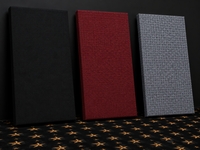
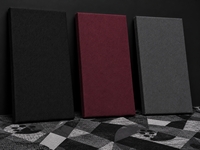
Compare Guilford of Maine FR701 2100 and Anchorage 2335 fabrics
for home theater acoustic panels, including texture, appearance,
color selection, durability, acoustic transparency, and room design.
Acoustic panel fabric affects the appearance, texture, durability, and
finished character of the panel, but it must also allow sound to pass
through to the absorptive fiberglass behind it.
A decorative upholstery fabric may look attractive but can reflect sound
if its weave is too dense or its backing is not acoustically transparent.
Acoustic panel fabric is specifically designed to cover sound-absorbing
material without significantly blocking sound from reaching it.
Guilford of Maine fabrics are widely used for acoustic panels, wall
systems, offices, theaters, studios, and commercial interiors because
they combine acoustic suitability with durable woven construction.
The fabric does not create the sound absorption.
The fiberglass core performs the absorption. The fabric provides a
breathable, durable, and decorative covering that allows sound energy
to reach the panel core.
Guilford of Maine FR701 2100 Fabric
FR701 2100 is one of the most recognizable acoustic panel fabrics and
is a practical choice for dedicated home theaters, media rooms, studios,
offices, and commercial acoustic treatments.
Classic Acoustic Fabric
FR701 2100 Appearance
FR701 has a clean, uniform woven texture that creates a
professional appearance without drawing excessive attention
away from the screen or room design.
Fine woven texture
Clean commercial-grade appearance
Broad range of colors
Works well in traditional and modern theaters
Suitable for partial or full-wall treatment
Best for Most Theaters
Why Choose FR701?
FR701 is a strong all-purpose choice for customers who want a
proven acoustic fabric with a restrained texture and extensive
color availability.
Acoustically transparent woven construction
Durable surface for residential use
Easy to coordinate with carpet and theater seating
Dark colors help reduce visible light reflections
Suitable for custom acoustic panel sizes
Excellent value for dedicated home theaters
Popular FR701 Color Families
FR701 offers colors ranging from deep theater-friendly neutrals to
brighter accent colors. The examples below represent general color
families rather than every available fabric color.
Black
Charcoal
Gray
Navy
Burgundy
Red
Brown
Tan
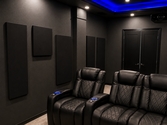
Dark FR701 colors such as black, charcoal, navy, burgundy, and dark
brown are especially popular near the front of a theater because they
minimize visible reflections from the screen.
Guilford of Maine Anchorage 2335 Fabric
Anchorage 2335 provides a more decorative, furniture-like texture for
customers who want acoustic treatment to function as part of the room's
interior design.
Luxury Appearance
Anchorage 2335 Texture
Anchorage has a more pronounced woven texture than FR701,
providing greater visual depth and a softer residential
appearance.
Richer woven texture
Furniture-quality appearance
Greater visual depth
Works well in upscale media rooms
Coordinates with seating and interior finishes
Decorative Acoustic Treatment
Why Choose Anchorage?
Anchorage is ideal when the acoustic panels will remain visible
as a major design element rather than blending quietly into
dark theater walls.
Acoustically suitable woven fabric
More decorative than standard panel fabric
Excellent for media rooms and multipurpose spaces
Available in neutral and accent colors
Works well with bevel-edge panels
Used on HT Design Luxury Acoustic Panels
Popular Anchorage Color Families
Anchorage includes subdued neutrals, theater-friendly dark colors, and
stronger accent colors for customers who want the panels to become part
of the room's decorative design.
Onyx
Asteroid
Blue
Teal
Green
Pumpkin
Poppy
Purple
FR701 2100 vs. Anchorage 2335
Both fabric collections can be used for acoustic panels. The primary
difference is the visual texture and design character each fabric
creates in the room.
Comparison
FR701 2100
Anchorage 2335
Overall appearance
Clean and understated
Textured and decorative
Fabric texture
Fine, uniform weave
More pronounced woven texture
Best application
Dedicated theaters, studios, and commercial rooms
Luxury theaters, media rooms, and living spaces
Visual presence
Designed to blend into the room
Designed to become part of the decor
Color selection
Extensive classic acoustic-panel colors
Decorative neutrals and accent colors
Acoustic use
Suitable for fabric-wrapped acoustic panels
Suitable for fabric-wrapped acoustic panels
HT Design product
HT Design Acoustic Panels
HT Design Luxury Acoustic Panels
Choose FR701 when you want a proven, understated
acoustic-panel fabric. Choose Anchorage when you want
the panels to provide richer texture and a more decorative appearance.
Does Fabric Color Affect Acoustic Performance?
Color does not meaningfully change the sound absorption of an acoustic
panel when the fabric construction and fiberglass core remain the same.
A black panel and a red panel constructed with the same acoustic fabric
and fiberglass core should provide comparable acoustic performance.
Color selection is mainly a room-design decision.
Front of the Theater
Use Darker Colors
Black, charcoal, dark navy, and burgundy help reduce visible
reflections near the screen.
Side and Rear Walls
Coordinate the Interior
Match or contrast the panels with theater seating, carpet,
curtains, wall colors, and architectural trim.
Media Rooms
Use Decorative Colors
Neutral or accent colors can make panels feel like part of the
furnishings rather than technical acoustic equipment.
How to Choose an Acoustic Panel Fabric Color
The best color depends on the panel location, room lighting, screen
placement, seating color, carpet, drapes, and the overall interior design.
Dedicated Home Theater
Control Screen Reflections
Use black or charcoal near the screen
Limit bright colors on the front wall
Coordinate with dark theater carpet
Match columns and decorative trim
Consider low-light appearance
Media Room
Coordinate with Furnishings
Match seating or sofa fabrics
Coordinate with painted walls
Use accent colors selectively
Consider daylight and room lighting
Choose texture as well as color
Should All Acoustic Panels Be the Same Color?
They do not have to be. A single color creates a clean, uniform
installation, while two or more coordinated colors can create patterns,
accent sections, or architectural rhythm.
When mixing colors, use a restrained palette. Too many unrelated colors
can make the walls look busy and distract from the screen.
A common approach is to use darker panels near the screen and a
coordinated neutral or accent color on the side and rear walls.
Why You Should View Real Fabric Samples
Computer monitors, phones, room lighting, and photography can all alter
the apparent color and texture of acoustic fabric.
A physical fabric sample allows you to compare the fabric directly with
your carpet, wall finish, seating, drapes, paint, and room lighting.
Evaluate the fabric under actual theater lighting
Compare texture and weave
Match the fabric to seating and carpet
Determine whether the color appears warmer or cooler in the room
Reduce the risk of selecting the wrong color from a screen image
Request Acoustic Panel Fabric Samples
Review real Guilford of Maine fabric samples before placing your
acoustic-panel order. Physical samples provide the most accurate way
to compare color, texture, and compatibility with your theater interior.
Guilford of Maine manufactures woven fabrics commonly used on
acoustic panels, office systems, wall treatments, theaters, studios,
and commercial interiors.
Is FR701 acoustically transparent?
FR701 is widely used as a breathable covering for acoustic panels.
Its woven construction allows sound to pass through to the
absorptive material behind it.
What is the difference between FR701 and Anchorage?
FR701 has a finer, more understated woven texture. Anchorage has a
richer decorative texture that gives acoustic panels a more
furniture-like appearance.
Does the fabric color affect sound absorption?
No meaningful difference should result from color alone when the
fabric construction and panel core remain the same.
What fabric color is best near a projection screen?
Black, charcoal, dark navy, and other low-reflectance colors are
generally preferred near the screen because they help minimize
visible light reflections.
Can different fabric colors be used in the same room?
Yes. Coordinated colors can create accent patterns or divide the
room into visual sections while maintaining consistent acoustic
panel performance.
Should I request a sample before ordering?
Yes. Physical samples provide a more accurate representation of
color and texture than photographs displayed on a monitor or phone.
Related Acoustic Panel Resources
Continue planning your home theater acoustic treatment with these
related HTmarket guides and product resources.
Select a breathable acoustic fabric that complements your room,
coordinates with your seating and carpet, and creates the appearance
you want from your finished acoustic-panel installation.